Musa × paradisiaca (Banana)
Banana — not a tree but a giant herb from Southeast Asia. The pseudostem is formed by tightly rolled leaf sheaths; each plant flowers once, then dies.
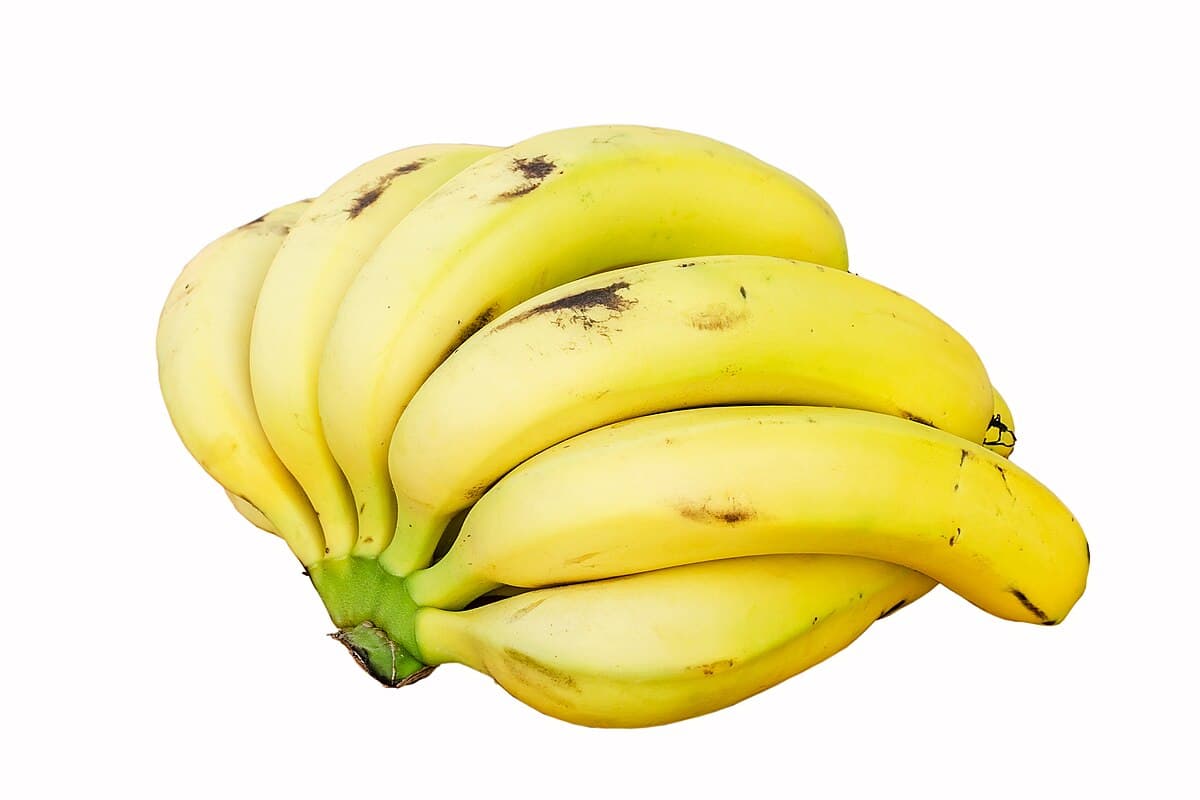
Quick Answer
Musa × paradisiaca is a hybrid herb (Musaceae) from Southeast Asia. Pseudostem of leaf sheaths; each plant flowers once; seedless fruit — parthenocarpy.
TL;DR | Quick Summary
Origin
Musa × paradisiaca is a hybrid cultivar developed in Southeast Asia from the wild species Musa acuminata and Musa balbisiana. Today it is grown across all tropical regions; Thailand is one of the world's largest producers.
Not a tree — a giant herb
Despite reaching up to 9 metres, banana is a giant monocot herb in the family Musaceae. The apparent "trunk" is a pseudostem: tightly packed, overlapping leaf sheaths. The true stem (corm) stays underground.
One flower, then done
Each pseudostem flowers once; after the fruit ripens the plant dies. The plantation is maintained by offshoots (ratoons) from the underground corm. Commercial production is entirely vegetative — cultivated fruit is seedless (parthenocarpy).
Wild vs. cultivated
Wild bananas contain hard black seeds and are barely edible. Dessert cultivars (e.g., Cavendish) and cooking bananas (plantains) are genetically related but differ significantly in starch content, texture and flavour.
In the botanical garden
In our collection, banana demonstrates the unique botany of Musaceae — a living example of how millennia of folk selection transformed humble wild plants into one of humanity's most important food crops. Cross-linked with our other tropical plants in the garden.
This article is for informational purposes only.