Albanian Authorities Intensify Crackdown on Illegal Cannabis Plantations
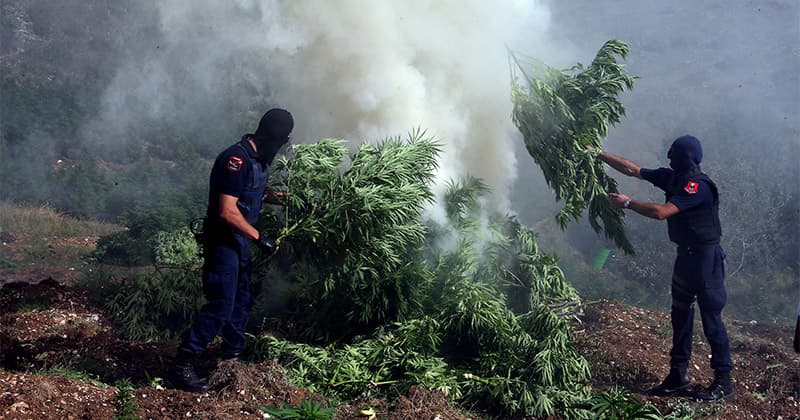
Albanian military forces are aggressively dismantling illegal cannabis plantations, highlighting the country's role as a major hub in Europe's drug trade
Key Points
- 1Albanian military targets illegal cannabis plantations in a major crackdown
- 2Albania is a key player in Europe's illicit drug trade, producing outdoor-grown cannabis
- 3Italy aids Albania by conducting aerial surveillance to identify plantations
- 4Despite efforts, many remote cannabis plantations remain operational
- 5The long-term impact of Albania's crackdown on the drug trade is uncertain
In Albania, the annual cannabis harvest season has taken a dramatic turn as military forces, armed not with farming tools but with machine guns, are actively destroying illegal cannabis plantations. These efforts are part of a broader European battle against drug trafficking, with billions of euros at stake. The Albanian landscape has become a focal point in this ongoing war on drugs, highlighting the country's significant role in Europe's illicit drug trade
Albania has long been recognized as a major hub for organized crime, with gangs trafficking a range of illegal goods across Europe. The country has increasingly become a key producer of outdoor-grown cannabis, distributed through a complex network of Albanian crime groups. According to the European drug agency, this illicit trade has positioned Albania as Europe's largest drug warehouse, further complicating the region's efforts to combat drug-related activities
Italy has become a primary destination for Albanian cannabis, smuggled in through various means, including speedboats and private aircraft. In response, the Italian military has been assisting Albania by conducting aerial surveillance to identify and destroy these plantations. Official reports indicate that by the end of August, one million cannabis plants had been eradicated, doubling the amount destroyed in 2014, illustrating the scale of the crackdown
Despite these efforts, many plantations remain, particularly in remote areas that are challenging to access. Allegations have surfaced suggesting collusion between Albanian politicians and criminal organizations, though those accused have denied involvement. The infamous region of Lazarat, once dubbed the 'cannabis kingdom,' serves as a stark reminder of the pervasive influence of the drug trade, with its production once valued at half of Albania's GDP
The effectiveness of this destruction policy remains uncertain on a European scale, as other countries like Morocco continue to supply cannabis to the continent. Historical parallels can be drawn to Latin America's struggles with coca plant eradication, which often harmed small farmers without significantly impacting larger criminal enterprises. As such, the long-term impact of Albania's crackdown on illegal cannabis production remains to be seen