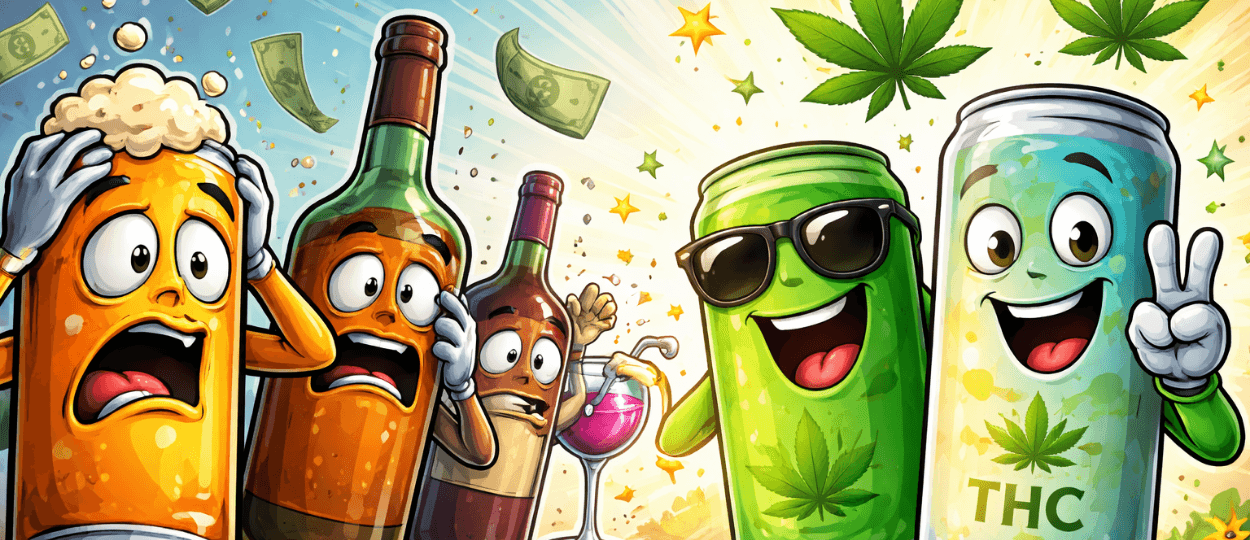
Cannabis Beverages Drive Down Alcohol Sales, Prompt Industry Concerns
Cannabis beverages are gaining popularity, leading to decreased alcohol consumption and prompting concern from the alcohol industry about market competition
Key Points
- 1Cannabis beverages are associated with reduced alcohol consumption
- 2High Times publisher calls out alcohol industry's reaction as financially driven
- 3Research shows cannabis beverages may replace alcohol for some consumers
- 4Study suggests a shift in consumer behavior impacting alcohol sales
- 5Alcohol industry faces pressure to adapt to changing market dynamics
The rise of cannabis-infused beverages is causing a notable shift in consumer habits, with new research indicating a decrease in alcohol consumption among users of these products. According to data published in the Journal of Psychoactive Drugs, adults who consume cannabis beverages are more likely to replace alcohol with these alternatives, leading to reduced drinking levels. This trend is drawing attention, particularly from the alcohol industry, which is facing potential market challenges as a result
Josh Kesselman, publisher of High Times, has publicly addressed what he perceives as a reactionary stance from the alcohol industry, labeling it a business-driven response to the growing popularity of cannabis beverages. He argues that the industry's concerns are financially motivated, given the apparent competition posed by cannabis products. "Big alcohol is our biggest foe right now that we know of," Kesselman stated, emphasizing the economic implications rather than health concerns
The study's findings, summarized by NORML, reveal that approximately one-third of surveyed adults who use cannabis beverages report substituting them for alcohol. These individuals also indicate a decrease in the frequency of binge drinking and overall alcohol consumption. While the study relies on self-reported data and does not establish a direct causal relationship, it highlights a pattern of behavior that could impact alcohol sales significantly
The implications of these findings are significant for both the cannabis and alcohol industries. As cannabis beverages become more mainstream, they are not only challenging cultural norms but also influencing consumer behavior. This shift underscores the need for the alcohol industry to adapt, potentially by exploring opportunities within the cannabis market itself. Kesselman suggests that instead of resisting, alcohol companies should consider entering the cannabis beverage space to remain competitive
Ultimately, the data suggest a realignment of consumer preferences that could reshape the beverage market. While the study does not confirm any deliberate attempts by the alcohol industry to undermine cannabis, it does illustrate the economic pressures at play. As the conversation around cannabis and alcohol continues, the focus remains on how these industries will navigate the evolving landscape