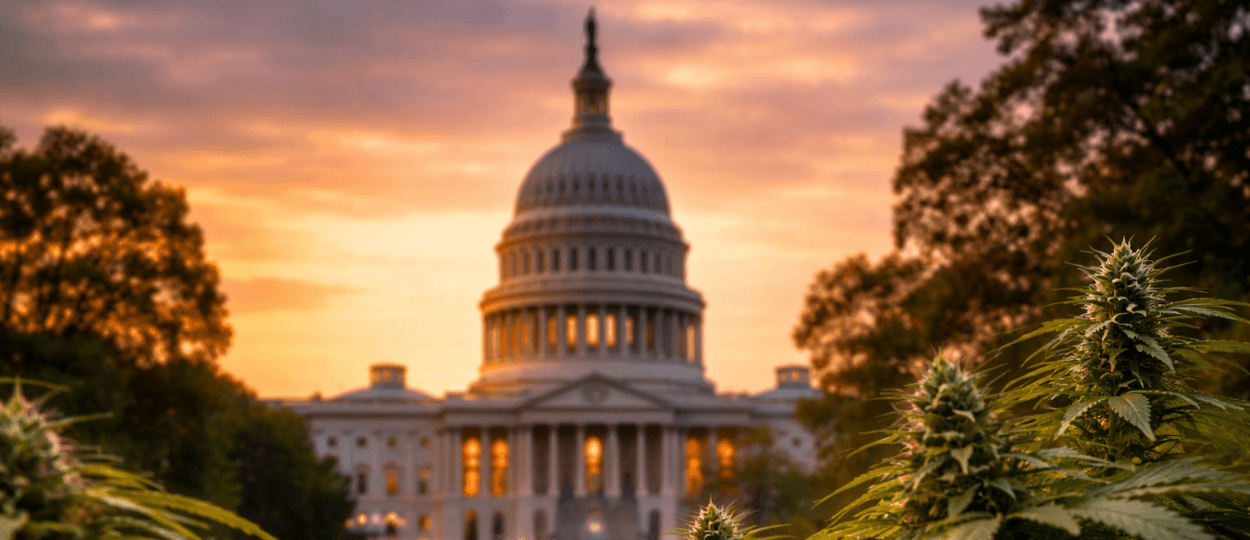
Cannabis Industry Faces Slow Progress in Washington Despite Reform Efforts
The cannabis industry remains in limbo as federal reform faces delays, requiring patience and strategic advocacy to influence Washington's slow-moving policy process
Key Points
- 1Federal cannabis reform remains stalled despite state-level legalization
- 2Washington's slow process requires strategic planning and investment
- 3Lawmakers' lack of industry knowledge hinders cannabis policy progress
- 4Uneven access to policy-making processes challenges cannabis advocacy
- 5Incremental wins are crucial for long-term federal cannabis reform
The cannabis industry continues to face significant hurdles in Washington, as federal reform remains elusive despite growing public support and state-level legalization. Advocates have long been promised that change is imminent, yet the industry remains in a state of uncertainty, largely locked out of banking systems and facing numerous regulatory challenges. The recent directive from the President to reschedule cannabis to Schedule III has not yet translated into tangible progress, leaving businesses and patients in a precarious position
According to High Times, the slow pace of change in Washington is not unexpected, as the system is designed to move deliberately rather than swiftly. This reality requires the cannabis industry to exercise patience, strategic planning, and financial investment to influence policy effectively. The process of reform is not driven by moral imperatives but by aligning incentives and applying sustained pressure on policymakers, which takes considerable time and resources
A significant barrier to cannabis reform is the lack of education among lawmakers, many of whom are not well-versed in the complexities of the cannabis industry or the broader implications of prohibition. This knowledge gap can lead to hesitation and delay in policy-making, even among those who are supportive of reform. As the administration considers rescheduling cannabis, it is crucial for industry advocates to engage with lawmakers to provide comprehensive insights into the regulatory, economic, and public health aspects of cannabis legislation
The cannabis industry must also contend with the uneven distribution of access to Washington's policy-making processes. Unlike well-established industries such as pharmaceuticals and alcohol, which have long-standing lobbying efforts, the cannabis sector is still building its presence. This disparity necessitates a commitment to long-term advocacy and investment in policy infrastructure, including hiring experienced lobbyists and conducting thorough data analysis to support reform efforts
Looking ahead, the path to federal cannabis reform will require resilience and strategic adaptation from the industry. Incremental victories, though often unsatisfying, are essential steps in a system resistant to rapid change. The industry must support those working tirelessly on the ground in Washington, ensuring that advocacy efforts are sustained beyond election cycles and that relationships with policymakers are nurtured. Only through persistent effort and strategic investment can the cannabis industry hope to achieve meaningful federal reform