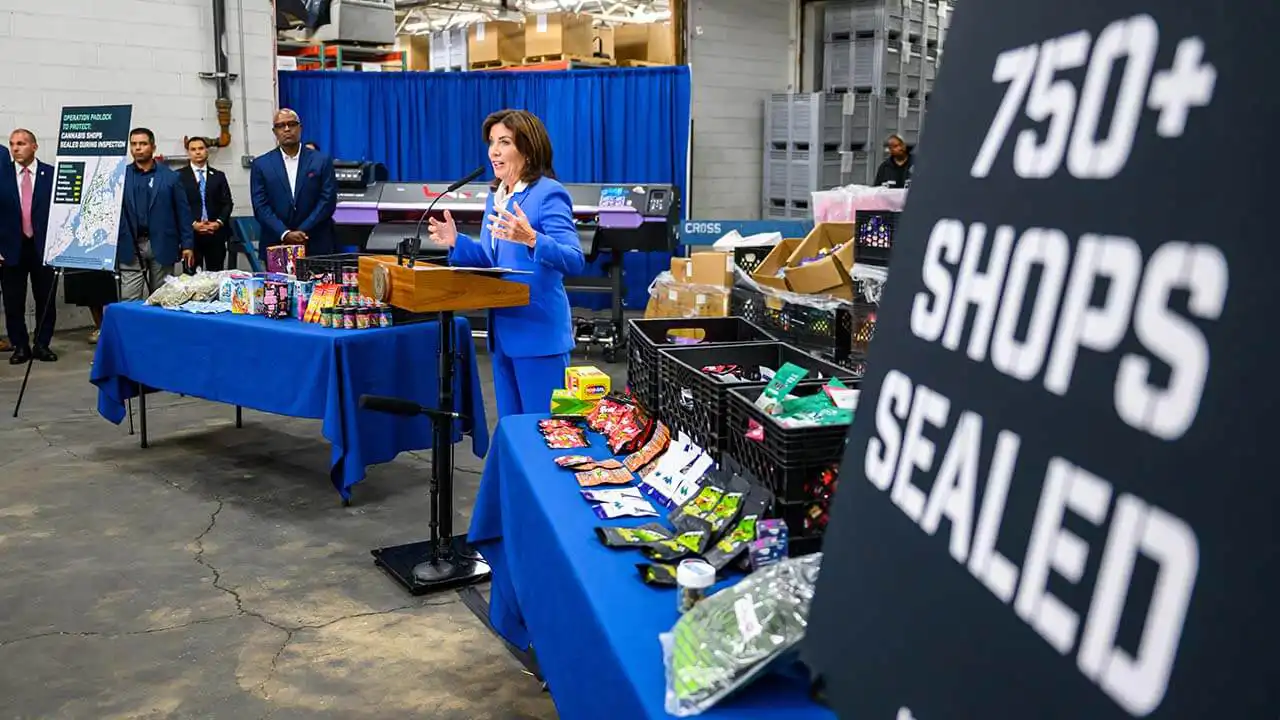
New York Cannabis Giants Sue State Over Inadequate Regulation and Illicit Market Invasion
Major cannabis operators in New York have filed a lawsuit against state regulators, claiming inadequate enforcement has allowed illicit products to flood the legal market. The lawsuit seeks to compel the state to implement a robust track-and-trace system
Key Points
- 1NYMCIA sues New York State over inadequate cannabis regulation
- 2Lawsuit highlights failure to implement track-and-trace systems
- 3Illicit market products allegedly infiltrating legal stores
- 4Regulators' actions criticized for threatening market integrity
- 5Implementation of Metrc tracking software delayed until 2026
In a significant legal move, the New York Medical Cannabis Industry Association (NYMCIA), representing major cannabis companies, has filed a lawsuit against New York State's cannabis regulators. The lawsuit, submitted to the state Supreme Court, accuses the Office of Cannabis Management (OCM) and the Cannabis Control Board (CCB) of negligence. According to the complaint, the state has failed to implement necessary track-and-trace systems, allowing illicit market products to infiltrate legal cannabis stores. This failure, the NYMCIA argues, threatens the integrity of the $1.8 billion legal cannabis market in New York
The NYMCIA’s lawsuit highlights ongoing frustrations within the cannabis industry regarding regulatory oversight. Since the adult-use cannabis rollout began in 2022, industry players have criticized the state for its perceived leniency towards illicit market activities. The NYMCIA claims that the absence of a robust seed-to-sale tracking system has compromised market integrity and public safety. The association's spokesperson emphasized the need for predictability and protection for all participants in New York’s cannabis programs, which the lawsuit seeks to enforce
The complaint names Felicia B. Reid, acting executive director of the OCM, and Jessica Garcia, chair of the CCB, as defendants. The NYMCIA represents multistate operators holding 13 permits for vertically integrated medical marijuana operations in New York. These companies have invested heavily in the state, often borrowing at high interest rates. Despite these investments, less than 30% of cannabis businesses are profitable, a situation the NYMCIA attributes to the regulators' inability to curb the influx of illicit cannabis
The lawsuit also addresses longstanding grievances related to the delayed launch of adult-use marijuana sales and the prioritization of social-equity applicants. According to the NYMCIA, these decisions have inadvertently bolstered New York's illicit cannabis market. The state has made some efforts to address diversion, such as the recent crackdown on a licensed processor involved in an inversion scheme. However, the slow implementation of a comprehensive track-and-trace system remains a critical issue
Plans to introduce a seed-to-sale tracking system in August were postponed due to a merger between Metrc and Biotrack, two leading tracking software providers. The timeline for implementing Metrc software remains uncertain, with early 2026 being the tentative launch date. The NYMCIA's lawsuit aims to expedite this process, holding the state accountable for meeting its regulatory obligations. As the legal battle unfolds, the outcome could significantly impact the future of New York's cannabis market