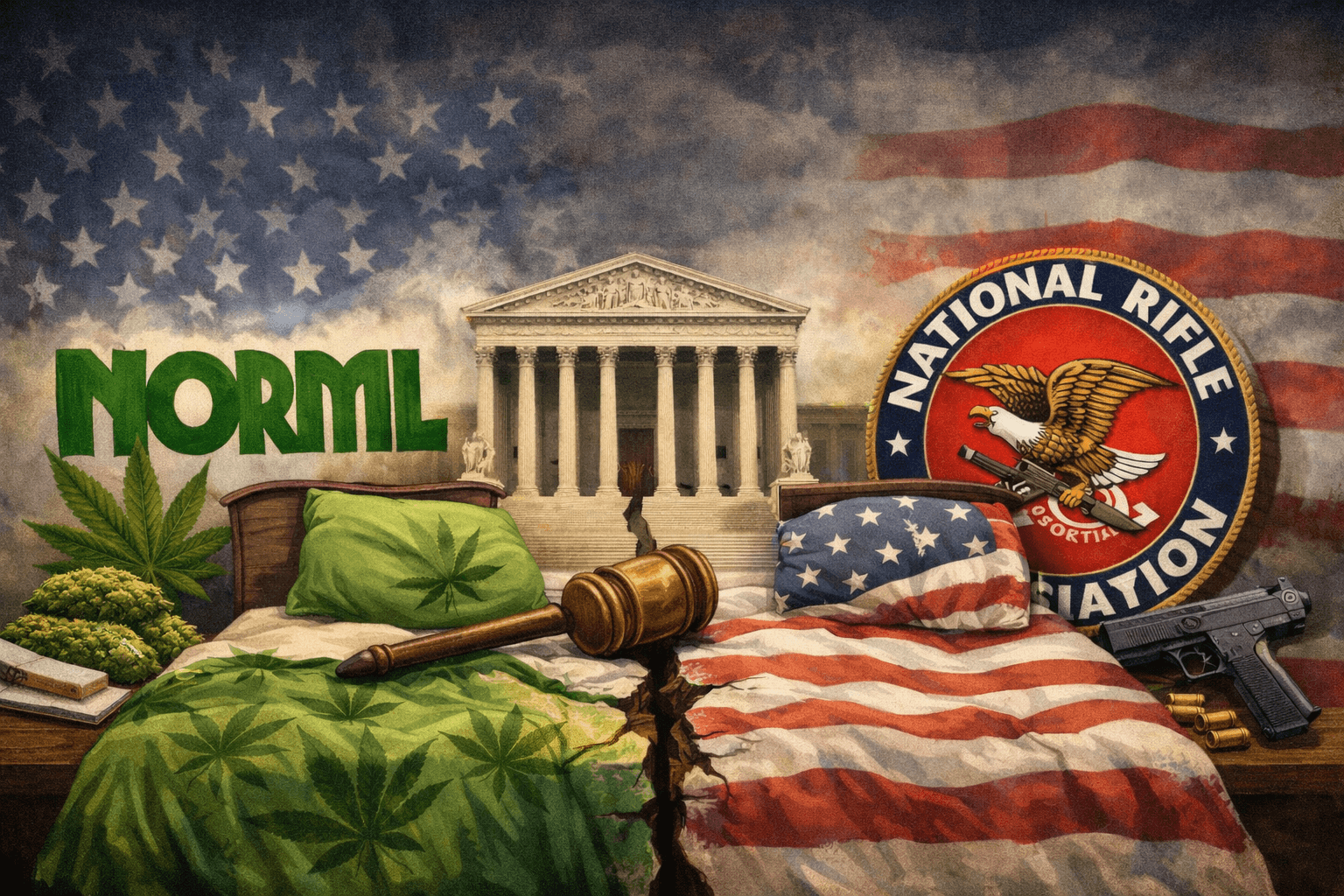
NORML and NRA Unite to Challenge Federal Cannabis Gun Ban in Supreme Court
NORML and the NRA join forces in a Supreme Court case challenging the federal ban on firearm possession by cannabis users
Key Points
- 1NORML and NRA challenge federal cannabis gun ban in Supreme Court
- 2The case questions the 1968 law barring cannabis users from gun ownership
- 3A diverse coalition supports the challenge, citing constitutional concerns
- 4The law's vagueness leaves cannabis users vulnerable to felony charges
- 5The case highlights federal-state contradictions in cannabis policy
In a rare alliance, the National Organization for the Reform of Marijuana Laws (NORML) and the National Rifle Association (NRA) are jointly challenging a federal statute that restricts gun ownership for cannabis users. The 1968 law prohibits any 'unlawful user' of a controlled substance from possessing firearms, a rule that now faces scrutiny in the Supreme Court case United States v. Hemani. This case questions whether such a broad ban can withstand modern constitutional analysis, especially as cannabis laws evolve across the United States
The Trump administration is advocating for the reinstatement of a prosecution against a Texas gun owner who uses marijuana, despite a federal appeals court having previously ruled against disarming individuals based solely on their past or occasional drug use without evidence of impairment or danger. This legal battle has attracted a diverse coalition of supporters, including criminal defense lawyers and civil liberties groups, who argue that the current law unfairly strips individuals of their constitutional rights without clear standards or individualized assessments
Historically, laws concerning firearms and intoxicants have focused on specific conduct, such as carrying a weapon while intoxicated, rather than imposing blanket bans based on past substance use. Critics argue that the current federal rule is vague and unconstitutional, as it lacks a clear definition of what constitutes an 'unlawful user' and how recent or frequent cannabis use must be to trigger a firearms ban. This ambiguity leaves many lawful cannabis users vulnerable to felony charges despite being sober and compliant with state laws
The case highlights the ongoing contradictions in federal marijuana policy, where cannabis is legal in many states yet remains a basis for federal legal penalties. Advocates hope that a Supreme Court ruling will clarify the definition of 'unlawful user' and reshape how cannabis-related firearm restrictions are enforced. This issue underscores the urgent need for federal policy to align with the realities of state-level cannabis legalization, as millions of Americans navigate the complex interface of gun rights and cannabis use