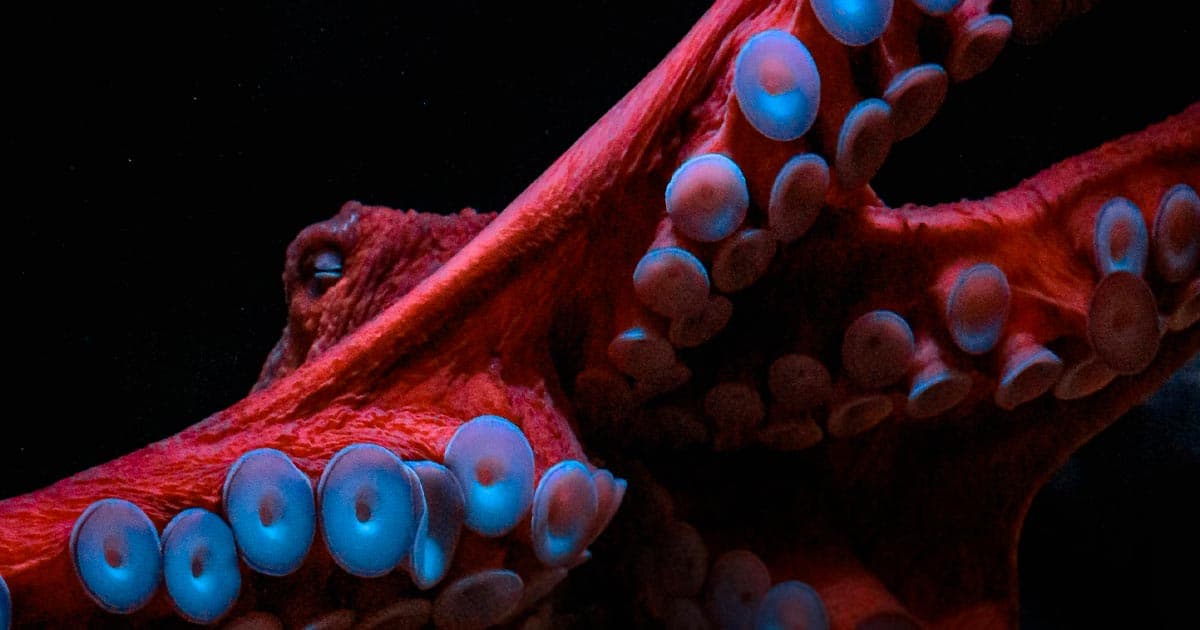
Study Reveals MDMA Induces Social Behavior in Octopuses Similar to Humans
Johns Hopkins University study shows octopuses exhibit human-like social behaviors under MDMA, revealing genetic links in serotonin transporters
Key Points
- 1Johns Hopkins study finds MDMA induces social behavior in octopuses
- 2Research highlights genetic similarities in serotonin transporters between octopuses and humans
- 3Study suggests evolutionary conservation of neurotransmitter systems for social behavior
- 4Findings may inform therapeutic applications for mood disorders
- 5Octopuses' complex behavior continues to intrigue scientists
A groundbreaking study from Johns Hopkins University has revealed that octopuses, typically solitary creatures, exhibit social behaviors similar to humans when exposed to MDMA, commonly known as ecstasy. The research, published in Psychedelic Spotlight, involved an experiment where octopuses were placed in an environment with MDMA-infused water, resulting in increased social interaction among the cephalopods
The study, conducted by neuroscientist Gül Dölen and colleagues, involved placing four octopuses in a specially designed tank with three connected chambers. One chamber was empty, another contained a toy, and the third housed a caged octopus. After exposure to MDMA, the octopuses spent significantly more time in the chamber with the caged conspecific, indicating a heightened social engagement
Dölen's research suggests that the social behaviors observed in octopuses under the influence of MDMA may be linked to genetic similarities in serotonin transporters between these marine animals and humans. Serotonin, a neurotransmitter associated with mood regulation, appears to play a crucial role in this cross-species behavioral parallel
The implications of these findings extend beyond marine biology, offering insights into the evolutionary conservation of neurotransmitter systems that govern social behavior. This discovery could pave the way for further research into the neurological underpinnings of social interaction across different species, potentially informing therapeutic applications for mood disorders
Octopuses have long intrigued scientists due to their complex behaviors and intelligence, often leading to comparisons with extraterrestrial life forms. This study adds a new dimension to our understanding of their consciousness and social capabilities, suggesting that the mechanisms underlying social interaction may be more universal than previously thought