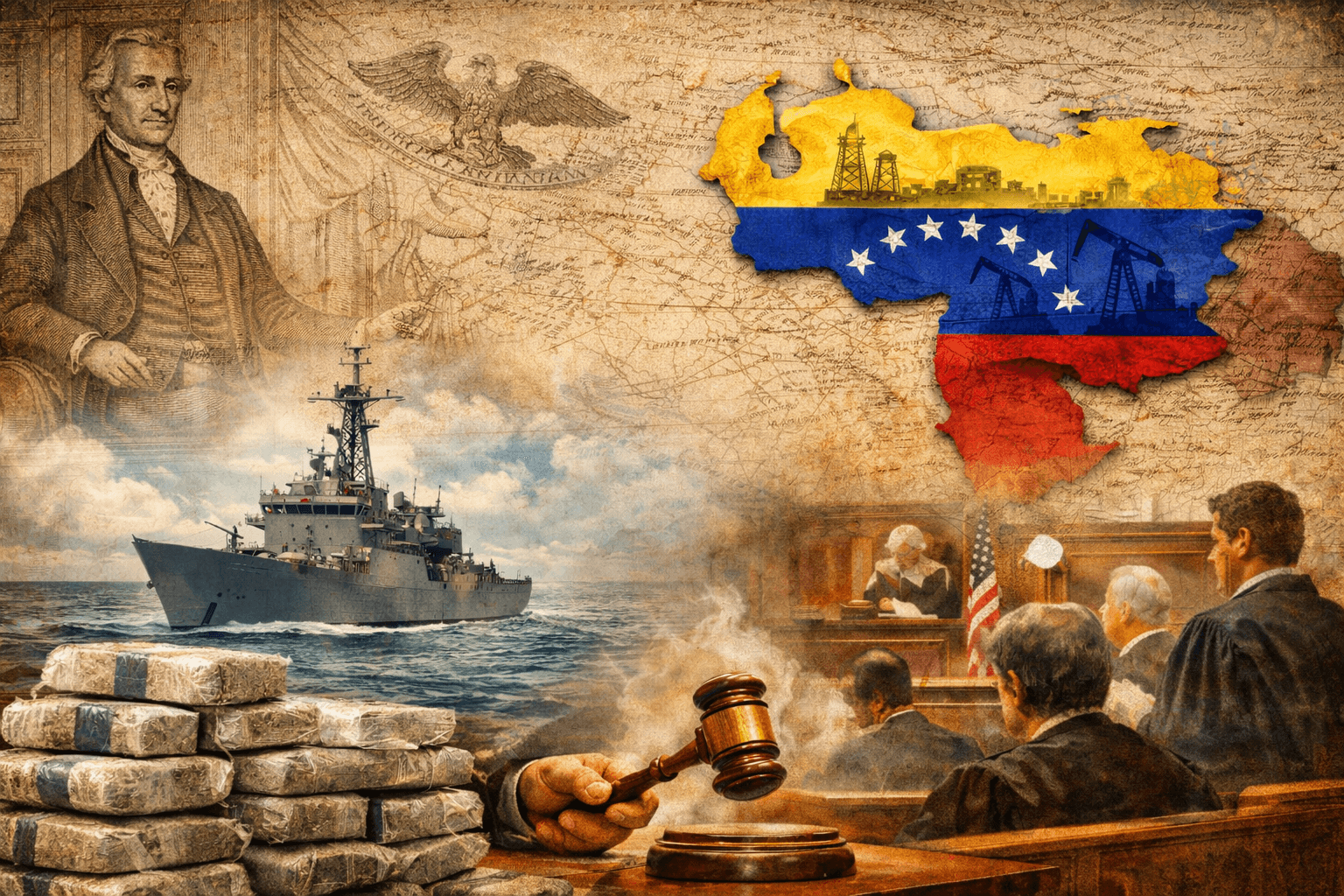
U.S. Military Actions in Venezuela Signal Broader Geopolitical Strategy
U.S. military and legal actions in Venezuela highlight a broader geopolitical strategy under Trump's administration, extending beyond traditional anti-drug efforts
Key Points
- 1U.S. targets Venezuela in broader geopolitical strategy
- 2Trump administration links drug trafficking to military actions
- 3Venezuela's role in drug trade is minor, but geopolitically significant
- 4Monroe Doctrine echoes in current U.S. foreign policy
- 5Drug policy intertwines with U.S. geopolitical objectives
The United States has ramped up military and legal measures against alleged drug trafficking in Venezuela, marking a significant shift in its foreign policy strategy. This renewed focus on the so-called 'war on drugs' under President Donald Trump's administration reflects a broader geopolitical maneuver. On December 29, 2025, Trump announced military strikes on a Venezuelan marine dock, purportedly used for drug trafficking, as part of an ongoing anti-narcotics campaign
U.S. officials have framed these operations as part of an 'armed conflict' with drug traffickers, a narrative that extends beyond traditional law enforcement. The capture of Venezuelan President Nicolás Maduro, accused of leading a cocaine trafficking network, highlights the legal and political dimensions of this strategy. These actions coincide with diplomatic efforts to extradite and prosecute officials in neighboring countries with alleged cartel connections, reinforcing the U.S.'s hardline stance
Secretary of State Marco Rubio has emphasized that the U.S. is targeting drug trafficking, not Venezuela itself. He warned that non-cooperative governments could face harsher treatment, while allies would be supported in efforts to dismantle drug networks. This approach reflects a strategic framing of drug trafficking as a security threat, justifying military interventions and diplomatic pressure
The current U.S. actions echo historical doctrines like the Monroe Doctrine, which opposed external interference in the Americas. Over time, the doctrine evolved to justify U.S. interventions in Latin America, particularly during the Cold War against communism. Today, drug trafficking and left-leaning governments are presented as threats that justify military actions, illustrating a continuity in U.S. foreign policy strategies
Despite the focus on Venezuela, experts argue that the country plays a minor role in global drug trafficking networks. According to the United Nations, cocaine production is concentrated in Colombia, Peru, and Bolivia, with trafficking routes primarily through Central America and Mexico. Venezuela's prominence in U.S. narratives is more about its geopolitical alignment with adversarial powers like China and Russia, rather than actual drug trafficking activities
The intertwining of drug policy with geopolitical objectives suggests a complex strategy that extends beyond mere narcotics control. The U.S. uses anti-drug narratives to mobilize military and intelligence resources, apply diplomatic pressure, and engage in legal actions like extraditions. This approach not only impacts U.S. foreign relations but also reshapes regional dynamics, highlighting the multifaceted nature of modern counternarcotics efforts