Unraveling Thailand's Chinese Heritage: Teochew & Hokkien Influence
Discover how Teochew and Hokkien communities have shaped Thai culture and commerce.
Quick Answer
The Teochew and Hokkien communities have significantly influenced Thai culture, commerce, and society through centuries of migration, contributing to a unique cultural synthesis.
TL;DR | Quick Summary
In the bustling heart of Bangkok's Chinatown, a vibrant street festival unfolds with a cacophony of firecrackers, dragon dances, and colorful lanterns. While this spectacle may seem solely Chinese, it epitomizes a profound cultural fusion that has shaped Thailand for centuries. The Chinese influence in Thailand is an intricate tapestry woven through generations of migration, predominantly by the Teochew and Hokkien communities, who have left an indelible mark on the country's cultural and economic landscape.
Background — historical or cultural context
The migration of Chinese communities to Thailand dates back to the Ayutthaya period (1350-1767), intensifying during the Rattanakosin era. Economic opportunities during King Rama I's reign saw an influx of Chinese immigrants, particularly the Teochew in Bangkok and the Hokkien in the southern provinces. These groups were instrumental in building the country's commerce, agriculture, and infrastructure, establishing themselves as influential figures in Thai society. The Thai kings recognized their economic contributions, granting them citizenship and land in exchange for their support in developing the kingdom.
What most people miss — the nuance expats should understand
While many recognize the visible elements of Chinese influence, such as the architecture in Bangkok's Chinatown, the deeper interwoven aspects are often overlooked. The Teochew and Hokkien communities have not merely transplanted their traditions; they have integrated them with Thai customs, resulting in a unique cultural hybrid. For instance, many Thai surnames with Chinese origins reflect a historical synthesis where Chinese migrants adopted Thai royal surnames as a sign of loyalty and integration. Additionally, the Chinese-Thai have played a pivotal role in shaping Thailand's political landscape, with several prominent Thai politicians and business leaders boasting Chinese heritage.
In daily life — concrete examples
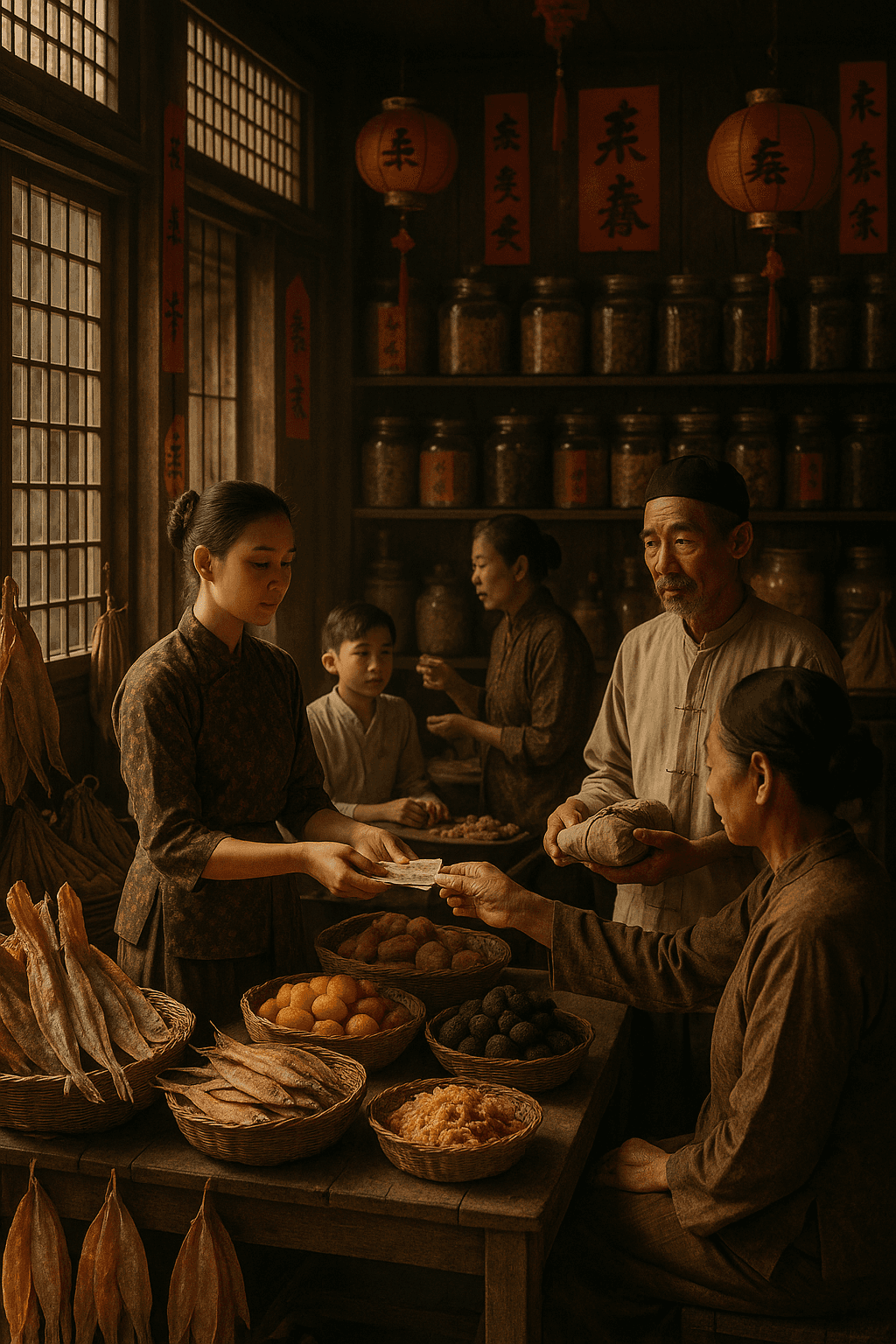
The Chinese influence permeates daily life in Thailand in numerous subtle and overt ways. In markets across the country, you'll find Chinese foods like dim sum and mooncakes sold alongside traditional Thai dishes. During festivals such as the Vegetarian Festival, which originated from Chinese traditions, entire streets are adorned with yellow flags as vendors sell vegetarian food, and participants engage in ritualistic acts of purification. In business, the legacy of the Chinese is evident in the numerous family-run enterprises that dominate sectors like banking, shipping, and real estate. Temples, too, such as Wat Mangkon Kamalawat in Bangkok, serve as cultural nexuses where Chinese and Thai spiritual practices intersect.
Why it matters
Understanding the Chinese influence in Thailand is crucial for expats seeking to grasp the complexities of Thai identity. Recognizing these cultural nuances fosters deeper appreciation and respect for the blended heritage that defines modern Thailand. It also provides insight into the socio-economic dynamics that have shaped the country's development, offering valuable context for those engaging in business or community activities in Thailand.