Temples as Thailand's Social Backbone
Thai temples are more than religious sites; they serve as community hubs offering education, charity, and cultural continuity.
Quick Answer
Thai temples act as community hubs, offering education, charity, and cultural continuity, transcending their religious functions.
TL;DR | Quick Summary
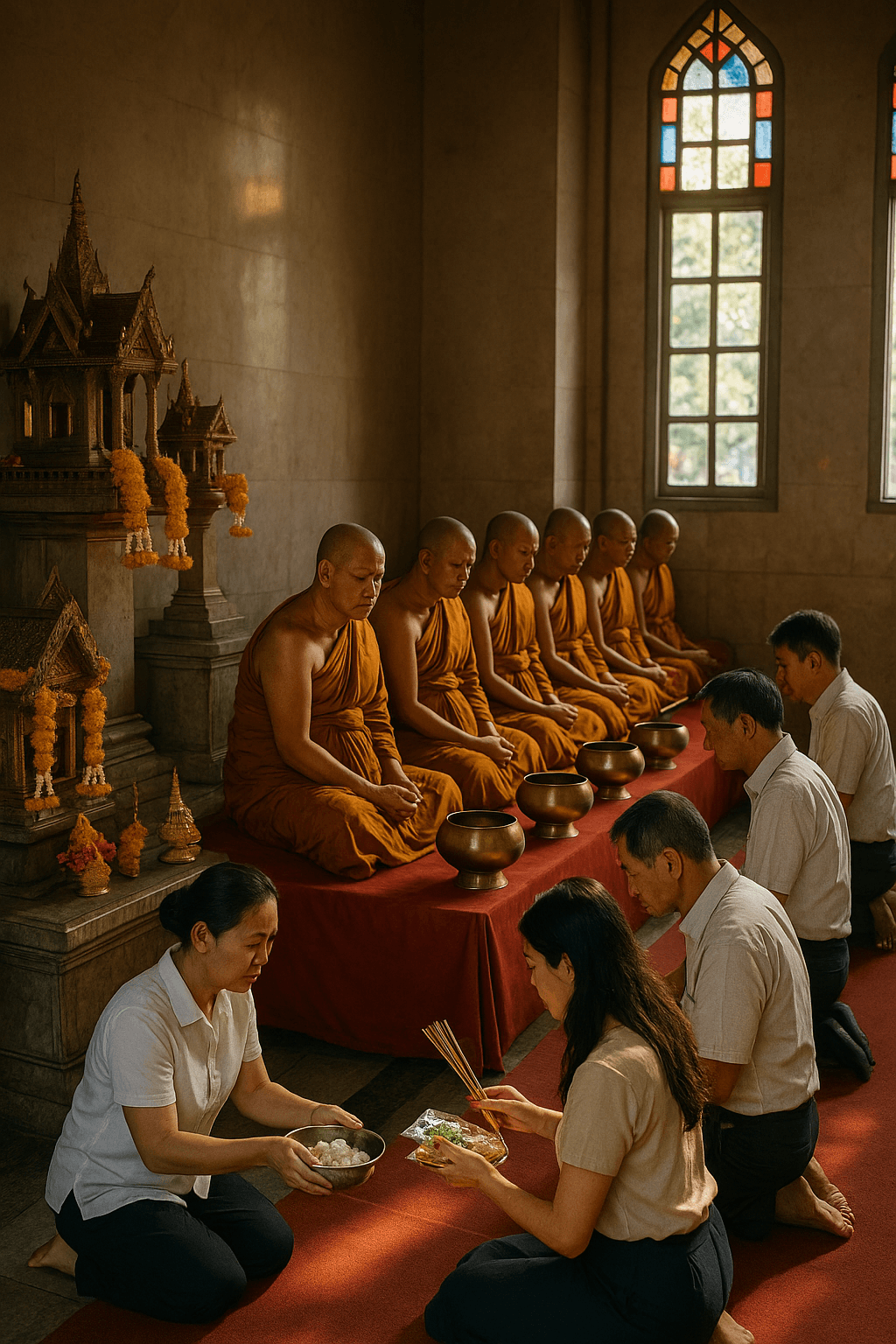
In a small town in Thailand's northeastern Isaan region, a local temple orchestrates an annual event that goes beyond religious observance. It serves as a community hub where families gather to donate rice for the needy, children engage in educational activities, and elders recount folklore that binds generations. This scene underscores the multifaceted role of Thai temples, transcending spiritual confines to act as cornerstones of social infrastructure.
Background — historical or cultural context
Buddhism took root in Thailand over a millennium ago, shaping not just religious life but also societal norms and community structures. Temples, or wats, have traditionally served as centers for learning. In earlier centuries, before the establishment of formal schools, temples were the primary educational institutions. Monks taught boys (girls traditionally did not receive formal education) not only religious texts but also literacy, mathematics, and moral conduct. This educational role persists in various forms today, providing supplemental cultural education and hosting programs that preserve local craftsmanship and folklore.
What most people miss — the nuance expats should understand
While many expats admire the architectural beauty of Thai temples and appreciate their cultural significance, fewer grasp the full extent of their roles as social institutions. Temples are often the first recourse for community aid. They serve as both informal welfare systems and mental health sanctuaries, offering support in times of distress. Furthermore, temples can be repositories of communal memory, where oral histories and traditions are maintained, ensuring that cultural narratives are not lost amid modernization.
In daily life — concrete examples
In everyday life, temples are vibrant centers of activity. At dawn, you'll find monks on alms rounds, collecting food offered by the community. These offerings support the monks and symbolize the interdependence between the monastic community and laypeople. Temples frequently host festivals that double as community fairs, where the lines between religious and social functions blur. During these events, vendors sell food and crafts, children participate in games, and community members engage in traditional dances and performances.
In rural areas, temples often facilitate agricultural cooperatives, advising farmers on sustainable practices and acting as mediators in local disputes. In urban settings, temples might host weekend markets or offer meditation retreats that attract a diverse group of attendees, including non-Buddhists seeking mindfulness training.
Why it matters
For expats living in Thailand, understanding the temple's multifaceted role can enhance community integration and appreciation. Participating in temple events or volunteering in their social programs offers a unique avenue to connect with local culture and people beyond superficial interactions. Recognizing temples as community hubs rather than mere tourist attractions allows for deeper engagement and respect for the societal norms shaped by these institutions.