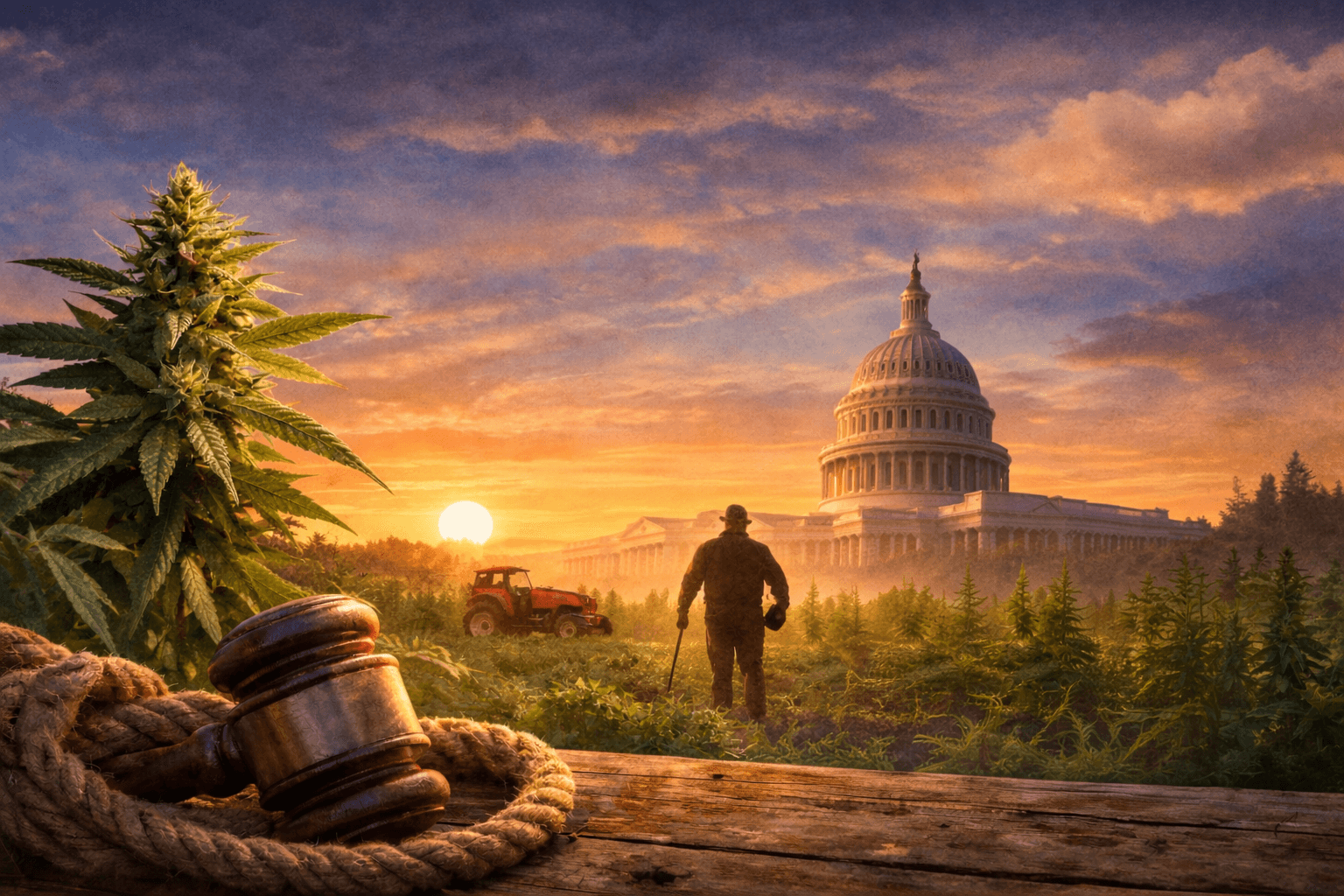
Bipartisan Bill Proposes Delay of Federal Hemp THC Ban Until 2028
A bipartisan bill proposes delaying the federal hemp THC ban to 2028, allowing more time for industry transition from prohibition to regulation
Key Points
- 1Bipartisan bill seeks to delay hemp THC ban to 2028
- 2The bill allows more time for industry transition to regulation
- 3It addresses concerns from farmers and trade groups about current timelines
- 4The proposal has garnered support from both parties in Congress
- 5The delay offers a chance to develop a more coherent hemp policy
A new bipartisan bill seeks to delay the enforcement of a federal hemp THC ban, providing a much-needed reprieve for farmers and industry stakeholders. The Hemp Planting Predictability Act, introduced by Rep. Jim Baird, aims to extend the timeline for implementing the new federal hemp definition from one year to three, shifting the enforcement date from November 2026 to November 2028. This move is designed to allow more time for the industry to transition from prohibition to a regulated framework
The proposed legislation comes in response to growing concerns from various sectors, including state officials, farmers, and trade groups, who argue that the current timeline is impractical. The bill, which is only two pages long, amends Section 781 of the appropriations law by changing the enforcement period from 365 days to three years. This amendment temporarily halts a significant policy change that would classify most hemp-derived products with more than 0.4 milligrams of THC as illegal marijuana, effectively collapsing much of the market established post-2018
The bill has garnered bipartisan support, with initial cosponsors including Reps. James Comer, Gabe Evans, Tim Moore, and Angie Craig. Lawmakers emphasize the necessity of the delay, citing the need for farmers to have certainty in their planning and investment decisions. "Planting and growing crops requires planning well in advance," Baird stated, highlighting the legal uncertainty faced by farmers due to the sudden policy shift
Industry groups, such as the U.S. Hemp Roundtable, have expressed their support for the bill, viewing it as a crucial pause rather than an evasion of regulation. Jonathan Miller, general counsel for the trade group, remarked that the delay would provide clarity for farmers and reduce the risk of supply chain disruptions. The extension is seen as an opportunity to develop a responsible regulatory framework that protects consumers while maintaining a legal agricultural industry
The introduction of the Hemp Planting Predictability Act underscores ongoing contradictions in federal cannabis policy. Despite President Donald Trump's previous endorsement of examining hemp definitions, the shutdown bill he signed initiated the ban. As reported by High Times, a Congressional Research Service memo questioned the feasibility of enforcing the ban, given resource constraints. The delay offers a chance for Congress to address these inconsistencies and work towards a more coherent policy
Looking ahead, the bill's progress remains uncertain amidst competing legislative efforts, including a Senate proposal advocating for a national regulatory framework. However, the introduction of this bill marks a significant step in reopening discussions about the future of hemp regulation. It signals that the implications of the hemp ban are being reconsidered, with the potential for a more balanced approach to emerge