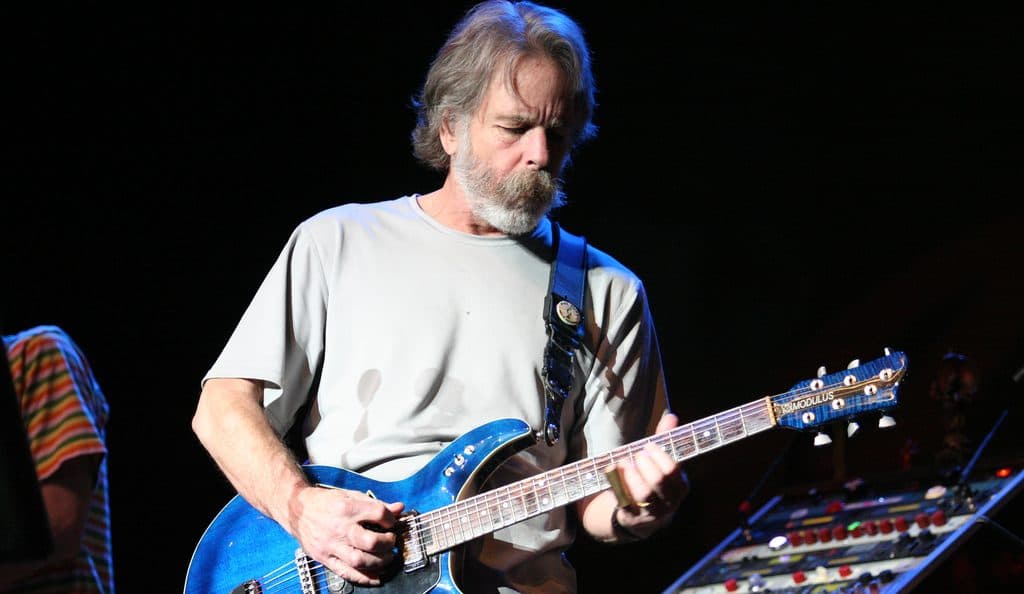
Bob Weir’s Legacy Illuminates Grateful Dead’s Evolving Relationship With Cannabis and Psychedelics
Bob Weir’s passing marks the end of a Grateful Dead era, highlighting his complex relationship with cannabis and the band’s enduring influence on counterculture
Key Points
- 1Bob Weir, legendary Grateful Dead frontman, passed away on January 10, 2025
- 2Weir’s early career involved cannabis use, but he later distanced himself from regular consumption
- 3Grateful Dead members and historians emphasize the band’s nuanced relationship with drugs, seeing them as creative tools
- 4A 2014 Weir quote about marijuana dependence sparked debate but was considered out of character by close associates
- 5Weir’s legacy extends beyond music to activism and community, influencing both cannabis culture and broader social movements
Bob Weir, the iconic singer, songwriter, and guitarist who helped shape the Grateful Dead’s legacy, passed away on January 10, marking the end of an era for the jamband scene. Weir’s influence stretched across six decades, from the band’s LSD-fueled beginnings in the 1960s to his final performances with Dead & Company in San Francisco’s Golden Gate Park in 2025. His death follows the earlier losses of Jerry Garcia in 1995 and Phil Lesh in 2024, closing a major chapter in American music history
Throughout his career, Weir maintained a nuanced relationship with cannabis and other psychoactive substances. In the early days, as recounted by drummer Bill Kreutzmann, Weir was a committed cannabis user, often sharing joints and psychedelic experiences with fellow band members. However, as time went on, Weir distanced himself from regular drug use, a shift that set him apart from some of his peers. David Gans, a longtime Grateful Dead historian and radio host, noted, “Bobby wasn’t a big pothead. When I used to hang out at his house in the early 1980s, there was always really good weed around, but he didn’t smoke much.”
The Grateful Dead’s reputation as a “drug band” has often overshadowed the more complex reality of their relationship with substances. According to Gans, “The categorization of the Dead as a ‘drug band’ is both technically true and utterly bullshit. The Grateful Dead were formed in a time of psychedelic urgency, and I firmly believe LSD was an important catalyst in the creation of their music. But to categorize them as a drug band, or as part of a drug culture, is to completely miss the point. We used drugs as tools, not anesthetics.” This perspective reflects a broader ethos within the band, where drugs were viewed as a means for spiritual and creative exploration rather than mere recreation
A notable controversy emerged from a 2014 HuffPost interview in which Weir commented on marijuana dependence, saying, “I know guys who are thoroughly addicted to marijuana. If they had to stop now, they’d get the shakes, they’d get the sweats.” These remarks were later cited by addiction treatment organizations, but drew surprise from those close to Weir. Dennis McNally, the band’s longtime publicist, responded, “I never saw Bob opposed to pot. He was always around dope smokers and never complained. I don’t know what mood he was in that day, but that comment seems out of character.”
Despite personal choices regarding substance use, Weir was widely respected for his integrity, activism, and commitment to the community. He was known for supporting causes such as HeadCount and the Seva Foundation, and for his environmental advocacy. As Gans highlighted, “Bobby was always known as the clean-living one. He was a mountain biker, a jogger, a football player. He still used drugs, but it wasn’t the center of his life.” The Grateful Dead’s legacy, with Weir at the forefront for decades, fostered a cultural environment where cannabis and psychedelics could be explored openly and creatively
From the OG Lab newsroom perspective, Bob Weir’s legacy underscores the enduring intersection of music, counterculture, and cannabis. As legalization and social acceptance of cannabis continue to grow, Weir’s life offers a reminder that the industry’s roots are deeply intertwined with broader movements for creativity, freedom, and community. The transition into ‘Phase Three’ of the Grateful Dead’s influence is a significant moment for both music and the evolving cannabis culture, and it’s one worth watching as the next generation picks up the torch