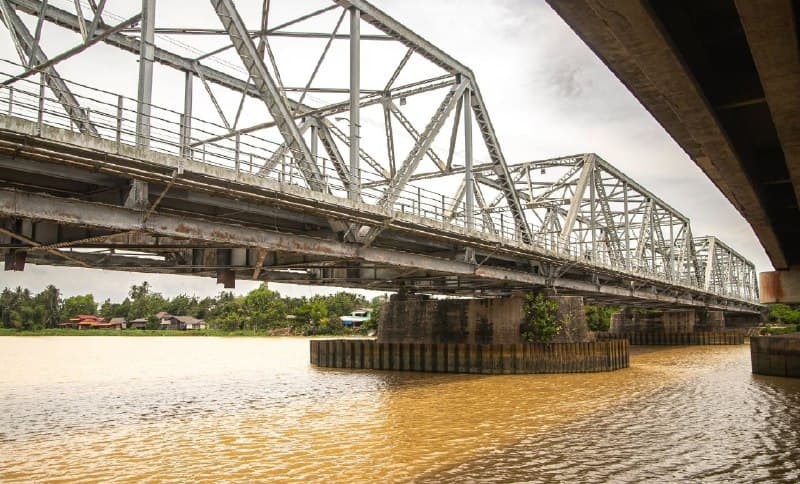
Chulachomklao Bridge in Surat Thani: A Century-Old Steel Icon
Chulachomklao Bridge in Surat Thani is a historic steel railway bridge built in 1915 that survived World War II bombings. It remains a key transport link and local symbol near Koh Samui.
Key Points
- 1Chulachomklao Bridge was built in 1915 as part of the Southern Line rail extension to the Tapi River.
- 2The bridge was a strategic supply route during WWII and was heavily bombed in 1945.
- 3Train services were suspended until the bridge was restored in 1953 with a new station built in 1954.
- 4Today, about 28 trains pass daily, and the bridge is a symbol of Surat Thani’s Phunphin district.
Surat Thani is often seen as a gateway to Koh Samui and Koh Phangan, but the Phunphin district holds a unique history closely tied to the railway. The steel truss bridge known as Chulachomklao Bridge has been a prominent landmark for over a century, with railway tracks running through the heart of the city. The bridge and its surrounding infrastructure have shaped the identity of the area beyond being just a transit point.
The Southern Line of Thailand’s State Railways reached the Tapi River in 1915, stretching about 230 kilometers. To cross the river, the impressive Chulachomklao Bridge was built and named in honor of King Rama V. The local station, originally called Phunphin, grew into the largest transport hub in the south, located 635 kilometers from Bangkok, becoming a vital link for both people and goods.
During World War II, the Japanese used the bridge as a strategic supply route, and in 1945 it was heavily bombed by Allied forces, causing significant destruction and suspending train service for several years. Temporary crossings operated until the bridge was fully restored in 1953, with a new station built the following year. Today, about 28 trains pass through daily, and the bridge remains a proud symbol of the district, featured in local crests and city decorations.