How Siam Stayed Independent: The Art of Thai Diplomacy
Discover how Siam's strategic diplomacy and modernization under Rama V kept it free from colonization.
Quick Answer
Siam maintained its independence through strategic diplomacy, modernization under King Chulalongkorn, and skillful negotiation with colonial powers.
TL;DR | Quick Summary
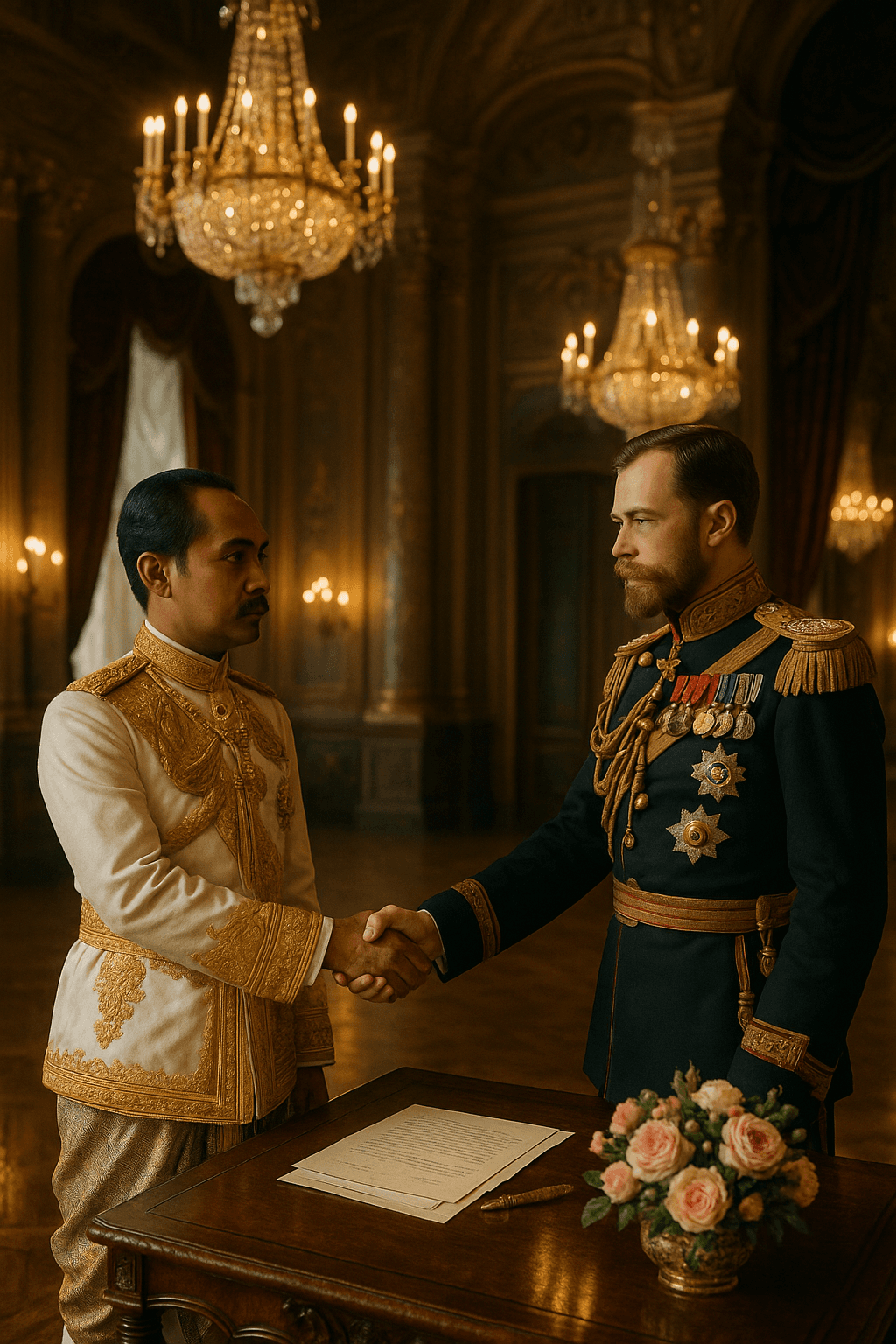
In September 1897, the French magazine L'Illustration put King Chulalongkorn (Rama V) and Tsar Nicholas II on its front page — from a photograph taken in Saint Petersburg during Rama V's European tour. Similar images ran in British and other European newspapers. These were not royal souvenirs: they told the world that Siam had modern allies at the very moment Britain and France were tightening their hold on Burma and Indochina on either side of the kingdom.
Background — historical or cultural context
During the late 19th and early 20th centuries, colonial powers like Britain and France were voraciously carving up Southeast Asia. The British had already seized Burma, while the French laid claim to Indochina. Sandwiched between these two colonial giants, Siam's independence hung in the balance. King Chulalongkorn, aware of the precarious position of his kingdom, embarked on a series of reforms and diplomatic initiatives to safeguard his nation’s sovereignty. His efforts included modernizing the military, infrastructure, and legal system to present Siam as a "civilized" nation in the eyes of Western imperialists.
What most people miss — the nuance expats should understand
While many are aware that Thailand was never colonized, the subtle art of diplomatic maneuvering that secured this independence is often overlooked. King Chulalongkorn's strategy involved not only modernization but also an astute use of international diplomacy. His visit to Europe in 1897, where he met with rulers including Queen Victoria and Tsar Nicholas II, was pivotal. These visits were not mere formalities; they were carefully crafted to build alliances and present Siam as an equal, modern state. Furthermore, the 1893 Franco-Siamese War illuminated the risk of confrontation and underscored the need for astute diplomacy and treaty negotiation, such as the Franco-Siamese Treaty of 1904, which solidified Siam's borders.
In daily life — concrete examples (markets, offices, temples, family, business)
The legacy of Siam's independence is woven into the fabric of daily life in Thailand. In markets and offices, the emphasis on harmonious relationships reflects the diplomatic balancing act of the past. Just as King Chulalongkorn navigated international waters, Thais often navigate social interactions with an emphasis on compromise and mutual respect. In temples and family settings, the values of loyalty and respect for hierarchy—key elements in King Chulalongkorn's modernization efforts—remain deeply ingrained. In business, the emphasis on maintaining face and fostering long-term relationships echoes the diplomatic strategies that protected Siam’s sovereignty.
Why it matters
For expats living in Thailand, understanding this historical context enriches interactions and deepens cultural appreciation. Recognizing the value Thais place on diplomacy and harmony can guide more effective communication and foster better relationships. It also highlights the resilience and adaptability of Thai society, offering insights into how to navigate both professional and personal landscapes in a country that has skillfully maintained its independence.