Beyond Hello: The Nuances of the Thai Wai
Discover the complexities of the Thai wai, a gesture rich in respect and hierarchy, essential for both personal and professional interactions.
Quick Answer
The Thai wai is a nuanced gesture indicating respect and hierarchy, with variations for different social situations and relationships.
TL;DR | Quick Summary
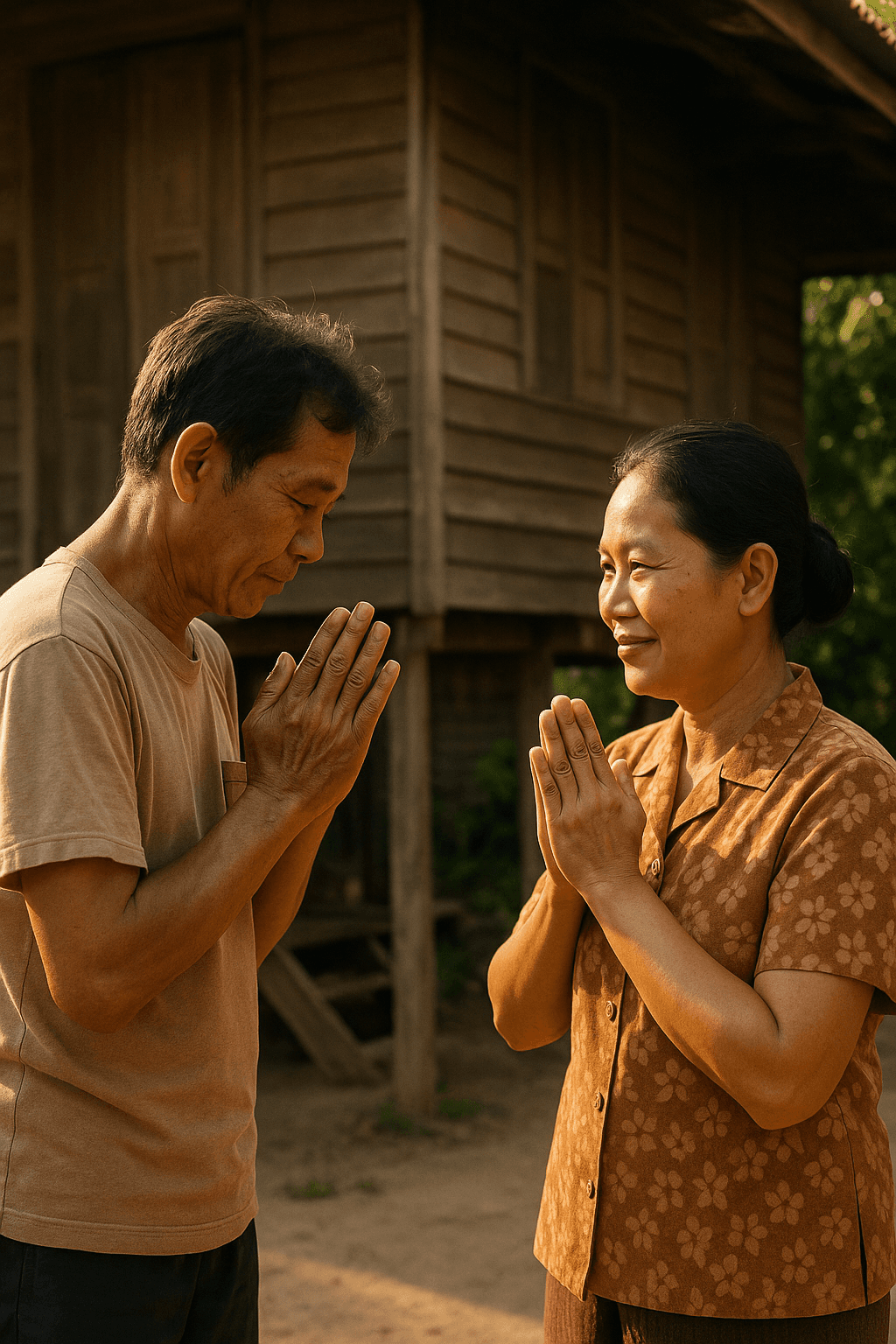
Opening a conversation with a Thai person might start with a simple "wai" (ไหว้), a gesture that transcends the typical handshake in Western cultures. But did you know that the wai is not a monolithic gesture? The angle of the head, the height of the hands, and even the depth of the bow can signal a wide spectrum of meanings, from a casual hello among equals to a reverential salutation to a monk. Misinterpret this nuanced greeting, and you could inadvertently disrespect someone or misrepresent your own status.
Background — historical or cultural context
The wai is rooted deeply in Thai society and culture, influenced by Buddhist traditions and historical social hierarchies. Originating from an ancient Indian gesture called "anjali mudra," the wai was adapted as a way to show respect and acknowledge the status of others. This gesture of bringing one's hands together and bowing slightly is not just a form of greeting but a fundamental expression of the Thai social hierarchy, where age, rank, and status are paramount.
In Thai society, the concept of "kreng jai" (เกรงใจ)—a sense of deference and consideration for others—is central. The wai is a physical manifestation of this cultural value, helping maintain social harmony and respect.
What most people miss — the nuance expats should understand
Many expats might perceive the wai as a simple greeting, similar to a wave or a handshake. However, its use is far more complex. The wai is not merely about saying hello; it encodes a plethora of social cues and expectations. The level of formality is dictated by the relationship between the individuals. For instance, when greeting an elder or someone of higher status, the hands are raised higher and the bow is deeper. Conversely, a wai to a peer might be more relaxed and informal.
The timing and context of a wai also matter significantly. It is customary, for example, to wai a monk with a deep bow, reflecting their revered position in Thai society. In contrast, wai-ing a child or someone of lower status is generally unnecessary and can come off as awkward or insincere.
In daily life — concrete examples
In the workplace, understanding the nuances of the wai can help you navigate the hierarchical structures typical in Thai companies. When meeting a superior, a respectful wai is crucial to convey the right level of deference. In social gatherings, properly greeting Thai friends and acquaintances with an appropriate wai can ease interactions and foster goodwill.
At temples, the wai is indispensable. Upon entering, a respectful wai to the Buddha statues and monks is a sign of respect and acknowledgment of the sacred space. Even in family settings, the wai is used to greet elders during family gatherings or significant cultural events like Songkran, Thai New Year.
In markets or casual settings, the wai is less formal but still prevalent. While vendors and customers might exchange a quick wai, the gesture often serves as a polite acknowledgment rather than a deep bow.
Why it matters
For expats, mastering the wai is more than just learning a local custom; it's about embedding oneself into the cultural tapestry of Thailand. Understanding when and how to wai appropriately can foster better relationships, both personally and professionally. It signals respect and a willingness to engage with Thai culture on its own terms, building bridges in a society that deeply values respect and harmony.