Local Worlds of Meaning: How to Choose the Games Worth Living In
Cars, code, business, chess, fashion, cannabis, spirituality, bodybuilding — not just pastimes but subworlds of significance. How those games work, why disillusionment arrives, and six rules for picking the worlds you actually want to live through.
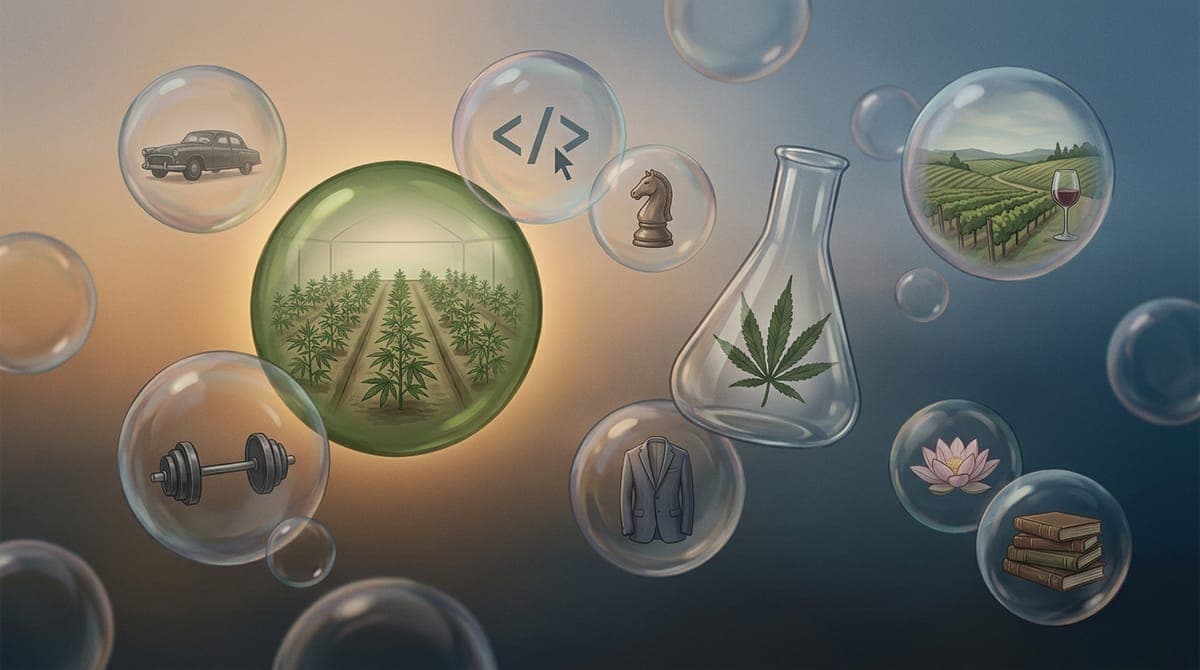
Most of human life does not play out in “reality in general” but inside local worlds of significance.
Cars, programming, business, chess, fashion, cannabis, spirituality, bodybuilding, politics, academic science — these are not merely activities. They are subworlds where:
-
there are criteria of what matters,
-
hierarchies,
-
wins and losses,
-
status markers,
-
ways to suffer and to rejoice.
If you step from inside such a world to the outside, it often becomes obvious that it does not carry the absolute weight felt by those inside.
Someone deep in car culture can experience choosing a car almost as a matter of fate. Someone outside sees transport. A programmer can agonize over an architectural decision as if the universe hung in the balance. From outside, it can look like an elaborate dispute about how to shuffle symbols.
That is not the same as saying nothing matters. It means significance is largely created by the frame.
What is really going on
Pure emptiness is hard to live in. So the mind keeps building:
-
a field of attention,
-
a scale of values,
-
a game,
-
a stage,
-
a role,
-
a way to measure yourself.
A subworld gives several things at once.
First — a structure of perception. You start seeing what others do not. For a car person, a car is not “a car” but a hundred parameters. For a programmer, code is not “text” but architecture, elegance, trade-offs, power.
Second — an emotional engine. Something to delight in, rage about, take pride in, envy, strive for.
Third — identity. You are no longer “just a person” but “one who gets it.” That is potent.
Fourth — a social mirror. Inside the subworld you can be recognized. Recognition is one of the strongest currencies.
So subworlds are not just hobbies. They are machines that manufacture meaning and inner states.
Why the cooling comes
Because sometimes you suddenly see the mechanism.
You were inside the game. Then you notice the game is:
-
conventional,
-
repeatable,
-
historically contingent,
-
not universal,
-
easily swapped for another.
Then something odd happens: what felt vital yesterday can look today like a beautifully organized conventionality.
That often arrives with age, a move, a change of scene, losses, fatigue, or contact with other worlds. We start to see not only the content of the game but the fact that it is a game.
The trap
When someone spots the conventionality of subworlds, they sometimes leap too fast: “if it is not absolute, it is empty.”
Not quite. Music has no absolute cosmic rank. Neither does conversation. A garden. A business. Every human form is, in some sense, conventional.
That does not make it worthless. Value does not have to be absolute to be real.
Subworlds are not the truth of the universe. They are containers in which human life takes shape. The task is probably not to find a “perfectly unconstructed” world — there may be none — but which constructed worlds are worth inhabiting.
The real question
If subworlds are conventional, by what rules do we choose and build them?
1. Choose by the quality of state, not prestige
Not “does this look impressive,” but:
-
who do I become inside this world?
-
is my attention clearer?
-
is there more clarity, strength, respect for reality?
-
does this world shrink me into someone petty, anxious, vain?
Some worlds look high-status yet leave people irritable, dependent, posturing, hollow. Others, without loud status, leave people collected, attentive, deep, calm. That distinction matters.
2. A good subworld builds real form, not only emotion
Skill, character, work, relationships, beauty, usefulness, understanding.
If a world only pumps ego and drama, it is a poor container. If it actually grows something, it is better.
For example:
-
programming can be ego theater or a way to build real systems;
-
business can be a status race or the creation of something durable;
-
growing cannabis can be “just business” or a practice of attention and quality.
3. Values should travel outward, at least partly
Some worlds are fully self-referential: you can be “king” inside and nothing transferable remains outside.
Others yield portable gains: discipline, taste, precision, patience, building, noticing detail, working with people, respect for reality. That is weightier.
4. Separate interest from identity
Loving cars, code, plants, or music is fine. Trouble starts when that becomes the main carrier of the self. Then any shock in that world lands like a blow to existence.
Healthier: I take part in this world; I am not identical to it. I can love programming without being reducible to it. I can build a business without being only the business. I can value excellence without being a prisoner of that scale. That stance buys freedom.
5. Several layers of meaning beat a single monopoly
If one subworld holds all of life, it becomes unbearably heavy; everything rides on success there.
Richer when there are layers: work, relationships, the body, beauty, thought, calm, play, service beyond ego. Then no single world owns the whole soul. In that light “new sobriety” in consumption culture is not a random trend — it is part of a wider shift from maximum intensity toward balance and multiplicity.
6. Reality or self-hypnosis?
Some subworlds are constant talk, comparison, peacocking — little contact with reality.
Others deepen contact: material, consequences, limits, the body, time, people, genuine quality. The more reality-linked, the healthier.
Six rules
One. Choose games after which you respect yourself for the quality of your presence and work — not for the image.
Two. Do not build your life around ladders invented only for in-group subculture hierarchy.
Three. Keep the right to become disillusioned without feeling betrayed. We are not obliged for life to bow to what once gave us meaning.
Four. Enter a world deeply, but keep the door slightly ajar.
Five. Value not only how intense the interest is, but also what it does to character and personhood.
Six. Test any subworld with the question: what remains if you remove status and approval? If nothing remains, that is a warning sign. If love of craft, beauty, precision, understanding remains — that is truer.
Closing
Maturity is not cold cynicism. It is seeing the conventionality of the game, refusing to be its slave, and still choosing games that make life deeper, cleaner, and more honest.
The question that stays personal for each of us: which subworlds are actually worth living a life through?
Quick Answer
Subworlds are local games of meaning (cars, code, business, etc.). Choose them by inner state and character, not prestige; prefer worlds whose values transfer; keep identity separate from interest; stack several layers of meaning; favor worlds that reconnect you with reality.