Jimmy John’s Launches Dream Rotation Campaign Featuring Cheech Marin and Kal Penn to Embrace Cannabis Culture
Jimmy John’s has openly embraced cannabis culture with its Dream Rotation ad campaign, featuring Cheech Marin and Kal Penn ahead of 4/20, marking a turning point for mainstream cannabis acceptance
Key Points
- 1Jimmy John’s launched the Dream Rotation campaign featuring Cheech Marin, Kal Penn, Amanda Batula, and Skylar Gisondo
- 2The campaign directly references cannabis culture, departing from previous subtle or coded brand approaches
- 3Celebrity participants revealed personalized sandwich orders and rituals, adding authenticity to the ads
- 4Legal adult-use cannabis now exists in most U.S. states, enabling mainstream brands to openly engage with cannabis culture
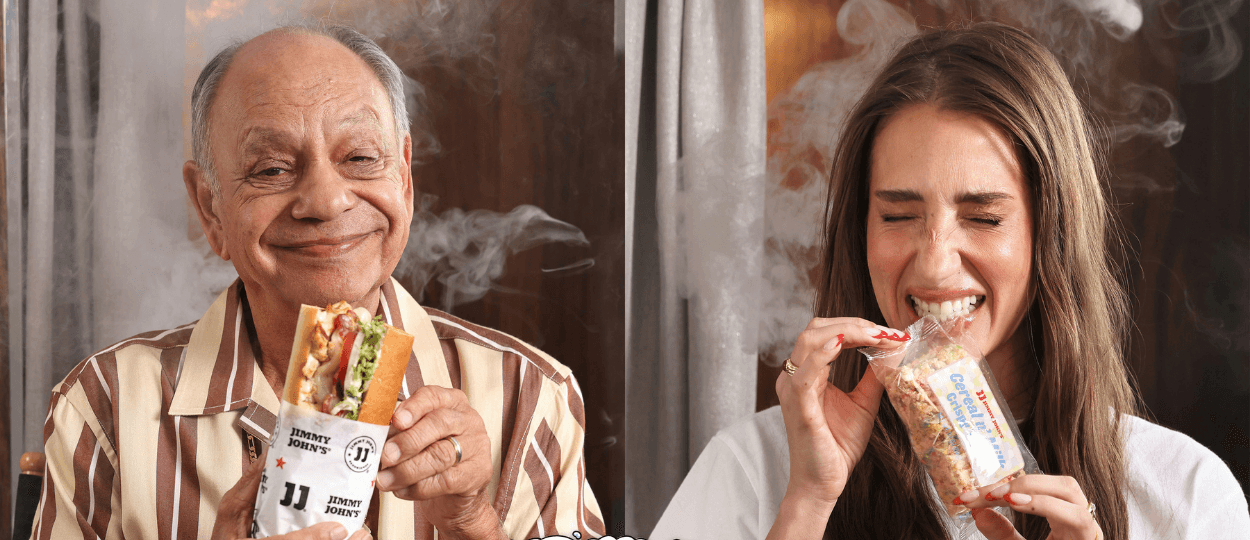
Jimmy John’s has taken a bold step into mainstream cannabis culture with its new Dream Rotation campaign, rolling out a series of advertisements ahead of 4/20 featuring celebrities closely associated with cannabis. The campaign’s centerpiece is a humorous commercial starring Cheech Marin, one-half of the legendary cannabis comedy duo Cheech & Chong, who finds himself in a surreal argument with a talking sandwich. This move signals a significant shift in how major brands approach cannabis references, moving from subtle hints to direct engagement with cannabis icons and humor
The Dream Rotation campaign distinguishes itself by casting celebrities whose personas are deeply intertwined with cannabis culture. Alongside Cheech Marin, the campaign features Kal Penn, known for his role in the 'Harold & Kumar' series, Amanda Batula, and Skylar Gisondo. Each celebrity was asked to share their ideal post-session sandwich order, resulting in a set of ads that blend genuine personality with playful nods to cannabis rituals. According to High Times, this approach marks a departure from the typical vague or coded references that have characterized previous mainstream brand efforts around 4/20
"This is not a wink. This is not a green leaf emoji in a caption. This is Cheech Marin, one-half of the most iconic cannabis comedy duo in film history, having a full argument with a sentient sandwich on behalf of a national fast food chain," the campaign notes. The specificity of the celebrities’ sandwich orders adds authenticity, with Kal Penn’s intricate ritual involving a toasted Beach Club, horseradish sauce, and a precise chip-to-sandwich sequence. Cheech Marin’s choice of the Italian Night Club with salt and vinegar chips, and his selection of Kal Penn as his dream session partner, further ties the campaign to the history of cannabis in pop culture
The campaign’s humor and authenticity extend to its digital content, with Skylar Gisondo featured in memes that use stoner slang and inside jokes familiar to cannabis enthusiasts. For example, captions like “me when my grandma asks me to garden with her” deploy the 'gardening' euphemism without explanation, signaling to the audience that the brand assumes they are in on the joke. This level of cultural fluency is notable for a brand with thousands of locations nationwide, reflecting the normalization of cannabis references in mainstream advertising
According to industry observers, the timing of this campaign is no accident. As legal adult-use cannabis is now available in the majority of U.S. states, the cultural stigma around cannabis has diminished rapidly, even as federal policy lags behind. Brands like Jimmy John’s now risk appearing out of touch if they ignore their customers’ evolving attitudes. The campaign’s direct and unabashed embrace of cannabis culture marks a watershed moment for national brands seeking relevance with younger, cannabis-friendly consumers
From the OG Lab newsroom perspective, Jimmy John’s Dream Rotation campaign showcases how cannabis culture has not only entered the mainstream but is being celebrated by major brands in ways that would have been unthinkable just a few years ago. This development signals a new era of marketing where authenticity and cultural awareness are paramount, especially as the cannabis industry continues to expand and influence broader consumer trends. Brands that embrace this shift may gain a competitive edge in connecting with a new generation of customers