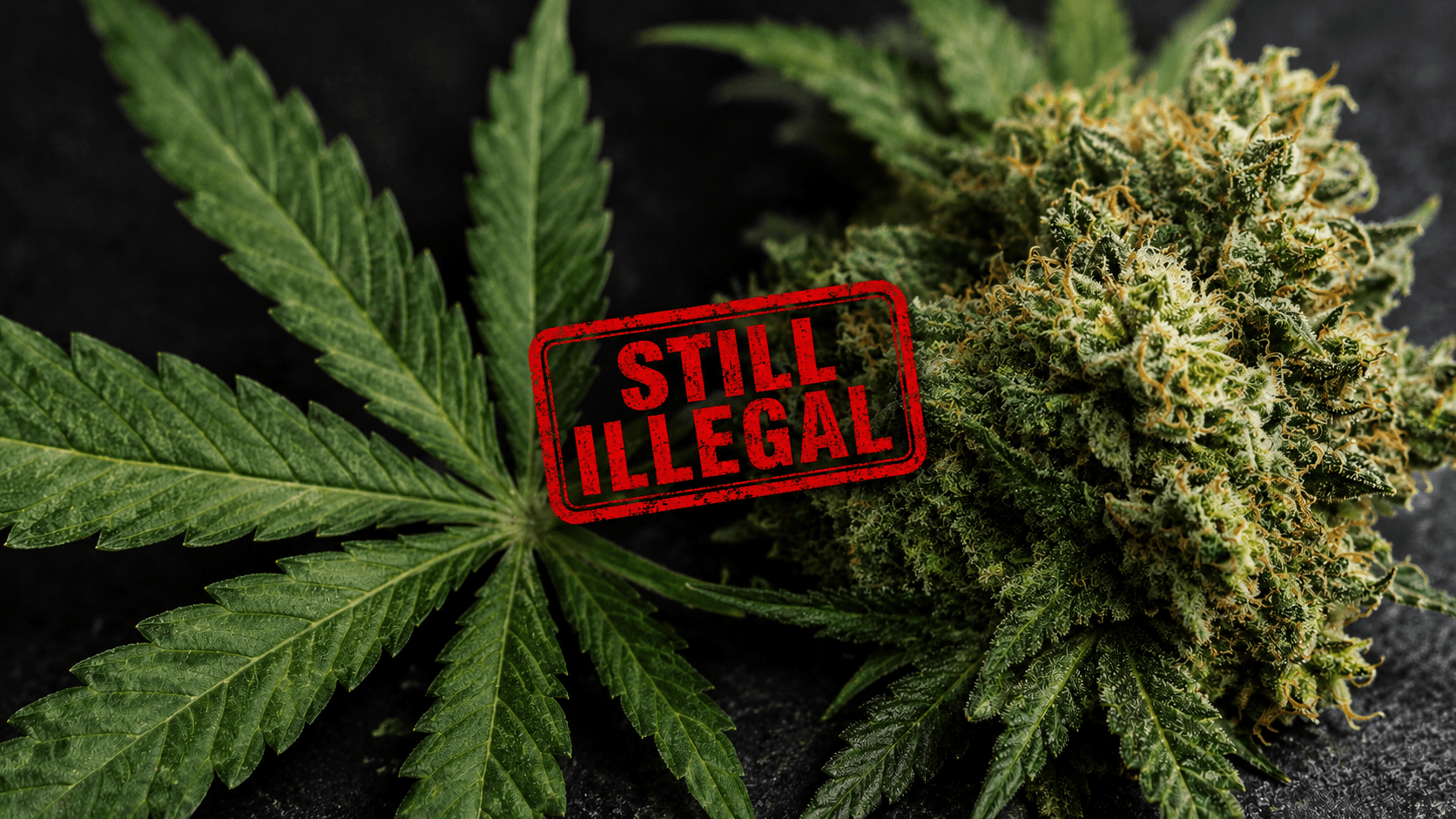
White House Drug Czar Clarifies Federal Cannabis Policy After Schedule III Rescheduling
White House drug czar Sara Carter Bailey clarified that only medical cannabis is protected by the recent rescheduling, while recreational marijuana and most hemp THC products remain federally illegal and enforcement priorities
Key Points
- 1ONDCP director Sara Carter Bailey stated that marijuana remains illegal except for medical use following federal rescheduling
- 2The April 23 order moved state-licensed medical cannabis and FDA-approved marijuana products to Schedule III
- 3Recreational cannabis and most hemp-derived THC products remain Schedule I and subject to federal enforcement
- 4The administration’s National Drug Control Strategy targets high-potency cannabis and foreign-linked illicit grows as enforcement priorities
- 5A federal ban on most hemp THC products is set to take effect on November 13, 2026, unless Congress acts
The Biden administration’s approach to cannabis enforcement took clearer shape this week as Sara Carter Bailey, director of the White House Office of National Drug Control Policy (ONDCP), stressed that marijuana remains “still illegal” in many contexts despite the recent federal rescheduling. In an interview with Newsmax, Carter Bailey responded to questions about cannabis potency and the administration’s new National Drug Control Strategy, emphasizing that the April 23 rescheduling order only covers state-licensed medical cannabis and FDA-approved marijuana products. Her comments underline a sharp distinction between federally recognized medical use and all other cannabis activities, which remain subject to enforcement under federal law
The April 23 order shifted certain forms of medical cannabis from Schedule I to Schedule III, placing them alongside substances like ketamine and Tylenol with codeine—prescription drugs with accepted medical uses. According to a Congressional Research Service report cited by High Times, the rescheduling “appears to authorize end users to possess marijuana for medical use without a CSA-compliant prescription,” removing medical cannabis patients from the 'illegal' category at the federal level. However, Carter Bailey’s messaging focused on the continued illegality of recreational marijuana and non-compliant hemp THC products, which are excluded from the new Schedule III protections
Carter Bailey’s interview further highlighted the administration’s enforcement priorities, particularly regarding so-called “high-potency” cannabis and illicit grow operations. She raised concerns about products she claimed reach “as high as 90 percent” THC, a figure that applies to concentrates but not to traditional cannabis flower. "It's still illegal. Executive-level Schedule III allows for doctors and research and for medicine, for medicinal purposes," Carter Bailey reiterated, signaling that the administration’s tolerance ends at the medical and research boundaries
The administration’s National Drug Control Strategy also frames foreign-linked illicit grows as a national security threat. Carter Bailey specifically mentioned grow operations allegedly connected to foreign entities, stating, “We also have a problem out there with illicit marijuana grows. These are grows that are connected directly to the [Chinese Communist Party], grows connected directly to Sinaloa cartel and [Cártel Jalisco Nueva Generación].” She further warned against adversarial states purchasing farmland for illegal cannabis cultivation, saying, “We should not allow adversarial states or adversaries to be purchasing farmland in the United States, even through straw men, to grow illicit marijuana and to not only poison our people, but poison our soil.”
Looking ahead, the administration has signaled a crackdown on most hemp-derived THC products beginning November 13, 2026, when new federal rules will move many popular hemp products—such as gummies, vapes, and tinctures—into Schedule I unless Congress intervenes. The federal strategy frames this move as necessary to address concerns over synthetic and high-potency cannabinoids, as well as criminal exploitation of regulatory gaps. While Carter Bailey previously expressed support for monitored legalization and medical cannabis, her current position from the ONDCP director’s chair draws a much harder line
From the OG Lab newsroom perspective, Carter Bailey’s remarks crystallize the administration’s intent to sharply delineate between medical cannabis, which gains a measure of federal legitimacy, and all other forms of cannabis activity, which remain enforcement priorities—especially those with alleged foreign or criminal ties. For the cannabis industry, this signals that while medical markets may enjoy some new protections, the broader fight over adult use, hemp products, and regulatory clarity is just beginning. Industry stakeholders should closely follow federal enforcement trends and prepare for significant changes in 2026 as the regulatory landscape evolves