Chamber Music Enlivens Bangkok's Cultural Heart at 140 Wireless
The Royal Bangkok Symphony Orchestra Piano Quintet brought refined chamber music to Bangkok's vibrant Lumpini–Wireless Road cultural quarter.
Key Points
- 1140 Wireless is a contemporary cultural venue in Bangkok’s Lumpini–Wireless Road area surrounded by greenery and urban life.
- 2The RBSO Piano Quintet performed Schumann’s and Dvořák’s major piano quintets with nuanced musical dialogue.
- 3The ensemble included Japanese pianist Hiroshi Isono, combining intellectual clarity with artistic sensitivity.
- 4Upcoming concerts will feature young rising stars, enriching the district's ongoing cultural development.
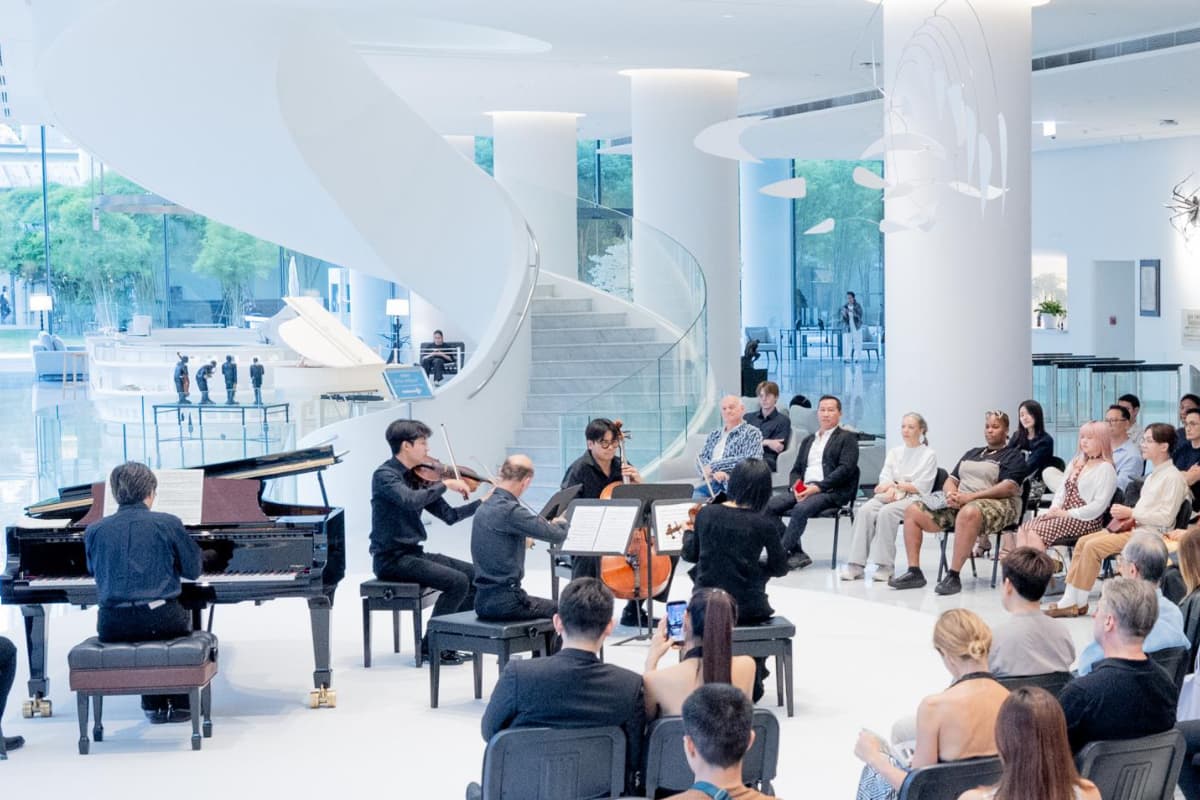
The Royal Bangkok Symphony Orchestra Piano Quintet recently presented an elegant evening of chamber music at 140 Wireless, an inviting venue nestled in Bangkok’s evolving Lumpini–Wireless Road cultural quarter. The space, bathed in soft natural light and surrounded by greenery, mirrors the refined yet vibrant character of the neighborhood, blending contemporary city life with serene parkside charm. This area, including Wireless, Sarasin, Somkid, and Ratchadamri roads, has become a dynamic urban hub, balancing embassies, residences, hotels, and cultural venues.
The concert featured two monumental piano quintets: Robert Schumann's emotionally intense Piano Quintet in E-flat Major, Op.44, and Antonín Dvořák's lyrical Piano Quintet No.2 in A Major, Op.81. The musicians, including RBSO members and Japanese pianist Hiroshi Isono, delivered a performance rich in musical conversation and dynamic layering. The ensemble’s interplay highlighted the distinct textures and moods of both compositions, from Schumann’s dramatic intensity to Dvořák’s folk-inspired warmth.
While a few moments hinted at room for deeper ensemble familiarity, the overall musical dialogue between the five independent voices was vivid and sincere—a hallmark of true chamber music. Highlights included the warm, expressive cello of Samatchar Pourkarua and the bridging viola tones of Atjayut Sangkasem, particularly in Dvořák’s Dumka movement. The concert reaffirmed the growing cultural importance of this part of Bangkok as a nurturing space for both established musicians and emerging talents.
Events like these enrich the local community, offering intimate artistic experiences amid a rapidly evolving urban landscape. Following this success, audiences can anticipate more performances showcasing young rising stars, continuing to enhance the cultural fabric of the Lumpini–Wireless Road area. For those visiting or living in Bangkok, such evenings offer a meaningful glimpse into the city’s vibrant cultural pulse.