Financial Institutions Target Cannabis Industry Through Speech Policing and Account Closures
Rainey Reitman's new book reveals how banks and payment processors have systematically punished the cannabis industry and its advocates by restricting both financial access and lawful speech
Key Points
- 1Rainey Reitman's book argues financial institutions have actively marginalized the cannabis industry
- 2Payment processor Stripe suspended journalist Jackie Bryant's account over cannabis-related hyperlinks
- 3Public pressure and media coverage led Stripe to reinstate Bryant's account after initial closure
- 4The book connects modern financial censorship to historical initiatives like Operation Choke Point
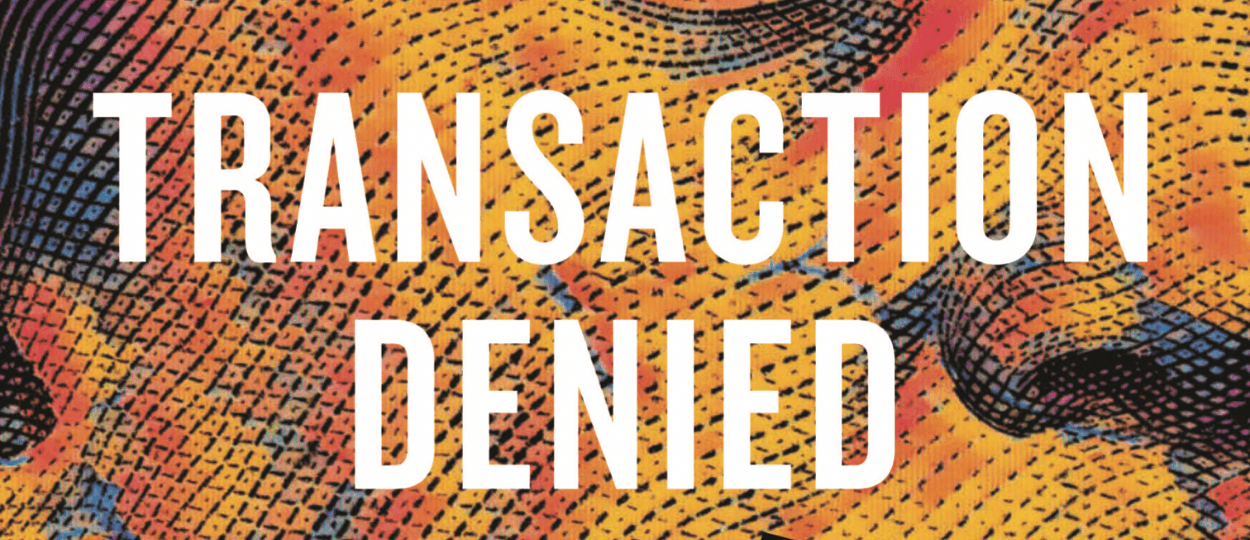
The cannabis industry's struggle with banking access has long been attributed to federal illegality and compliance concerns, but a new book by Rainey Reitman contends the situation is far more complex and insidious. In 'Transaction Denied: Big Finance’s Power to Punish Speech,' Reitman argues that the financial sector has not just sidelined cannabis businesses but has actively punished entire communities, including journalists and advocates, for engaging with the plant—often without transparency or recourse
Reitman's book, set for release on April 7 by Beacon Press, uses the cannabis industry as a central example of how financial systems can stifle not only commerce but also free expression. She asserts that banks and payment processors wield the power to act as gatekeepers, shaping which businesses, writers, and cultural movements are allowed to participate in public life. 'It is punishment, often delivered without transparency and with almost no meaningful recourse,' Reitman writes, highlighting that these financial blockades go beyond operational headaches to become a form of censorship
One of the most striking cases in the book involves journalist Jackie Bryant and her cannabis-focused newsletter, Cannabitch. According to Reitman, payment processor Stripe suspended Bryant’s account not because she was selling cannabis, but because her reporting included hyperlinks to websites that did. Stripe demanded Bryant 'audit' her blog and remove all such links before reconsidering her account, a move Bryant described as blatant censorship: 'It’s censorship, and I’m not selling anything.'
The controversy surrounding Bryant’s account escalated after public attention grew. When High Times reporter Clare Sausen contacted Stripe for comment and published a story on the situation, Stripe reversed its decision and reinstated Bryant’s account on the same day. Bryant noted the irony of Stripe's actions, stating, 'They’ve been taking money for four years from me,' only to suddenly find fault with her content due to cannabis-adjacent links. This episode underscores the power of public scrutiny to force reversals in opaque corporate decision-making
Reitman situates these recent developments within a broader historical context, referencing Operation Choke Point—an Obama-era initiative that pressured banks to limit services to industries deemed high-risk, including cannabis. She suggests that while not every account closure is part of a coordinated campaign, decades of prohibition and stigma have influenced financial institutions to shut out the cannabis sector, often defaulting to risk aversion rather than explicit directives. This pattern, according to Reitman, extends beyond businesses to anyone—journalists, advocates, entrepreneurs—whose work touches the plant
From the OG Lab newsroom perspective, Reitman’s analysis signals a new era in which financial institutions are not only policing transactions but also influencing the boundaries of speech and culture in the cannabis industry. As public scrutiny continues to play a pivotal role in holding these companies accountable, the industry should remain vigilant about the ways financial gatekeeping can limit not just commerce, but also the free flow of information and advocacy. This issue is critical to watch as the cannabis sector fights for legitimacy and equity in financial systems worldwide