Marmolada Glacier Retreat Highlights Urgent Climate Change in the Dolomites
The Marmolada glacier's rapid retreat is destabilizing the Dolomites, threatening water supplies and prompting urgent calls for expanded monitoring and climate adaptation across the region
Key Points
- 1Marmolada glacier is rapidly losing ice, altering the Dolomites' landscape
- 2Summer temperatures in Veneto have risen over 3°C above the historical average
- 3Degradation of permafrost and increased landslides are threatening mountain stability
- 4Legambiente is urging expanded monitoring and faster regional adaptation strategies
- 5Water shortages at high-altitude huts have led to new management protocols in Belluno
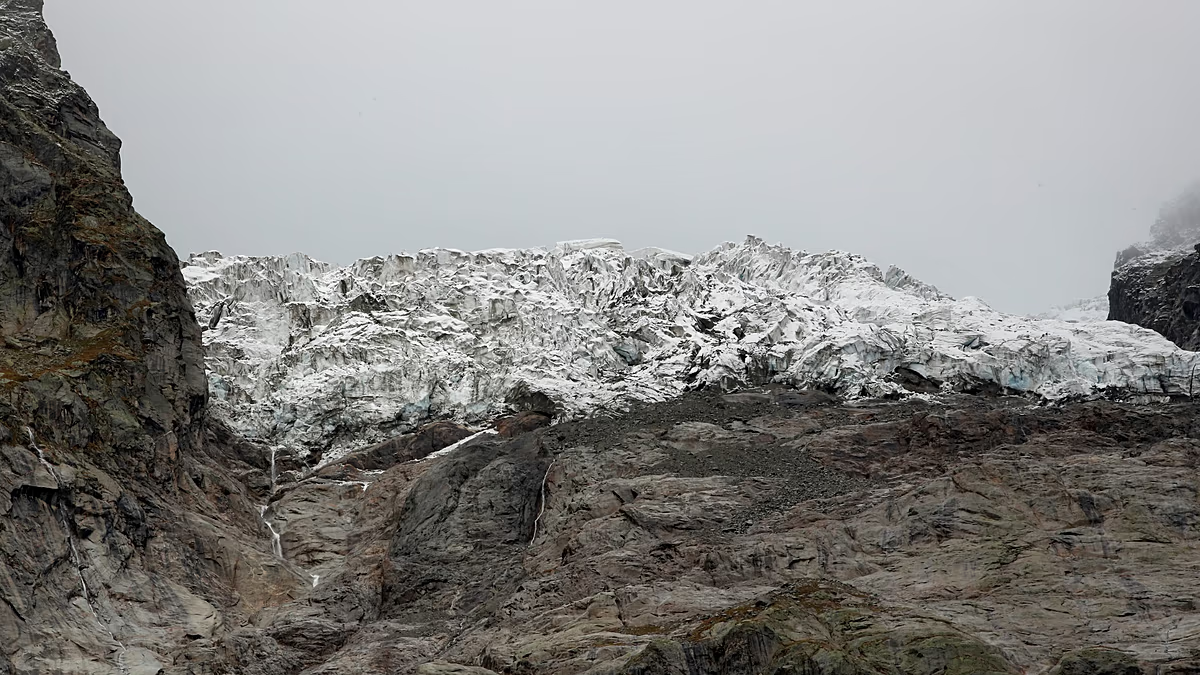
The Marmolada glacier, one of the Dolomites' most iconic ice masses, is shrinking at an accelerating pace, raising concerns over the stability of the mountains and the availability of water at high altitudes. This alarming trend was spotlighted by Legambiente Veneto during the seventh edition of the Glacier Caravan, an international initiative aimed at documenting the rapid transformation of the Alps. As the ice recedes, the physical appearance of Marmolada has changed dramatically, with grey, deeply scored ice and a shrinking perimeter providing visible evidence of shifting conditions
Climate change impacts in the Dolomites now extend far beyond aesthetics, posing tangible risks to both the environment and local communities. According to recent climate data, temperatures in Veneto during June 2026 were over 3 degrees Celsius higher than the 1991-2020 average, and July saw the freezing level soar above 4,000 meters. These conditions are not only accelerating glacier retreat but also degrading permafrost, the frozen ground that stabilizes mountain slopes, thereby increasing the risk of landslides and rockfalls
Legambiente has called for expanded monitoring of permafrost across key massifs such as Pelmo, Antelao, Sorapiss, Civetta, and Tofane. The urgency is underscored by the annual tally of 150-200 collapses and landslides in Belluno province, as well as recent rockfalls on Pelmo's north-west face. "The Veneto Dolomites are not just a postcard backdrop, but a living system that is changing faster than public planning can keep up with," said Fabio Tullio, spokesperson for the Glacier Caravan in Veneto
The effects of glacier retreat are also being felt in water availability, with high-altitude aquifers and reservoirs under increasing pressure. Alpine huts, which once relied on a steady supply of mountain water, are now facing shortages that have prompted the province of Belluno and CAI Veneto to implement new protocols for water management. Legambiente stresses that these changes are altering the conditions for locals, workers, and visitors alike, making adaptation an urgent priority
OG Lab notes that the Marmolada's decline is a stark reminder of the broader transformations underway in the Alps. Continued monitoring and swift adaptation measures will be crucial for protecting both the natural environment and the people who depend on it, as the Dolomites face an increasingly uncertain future