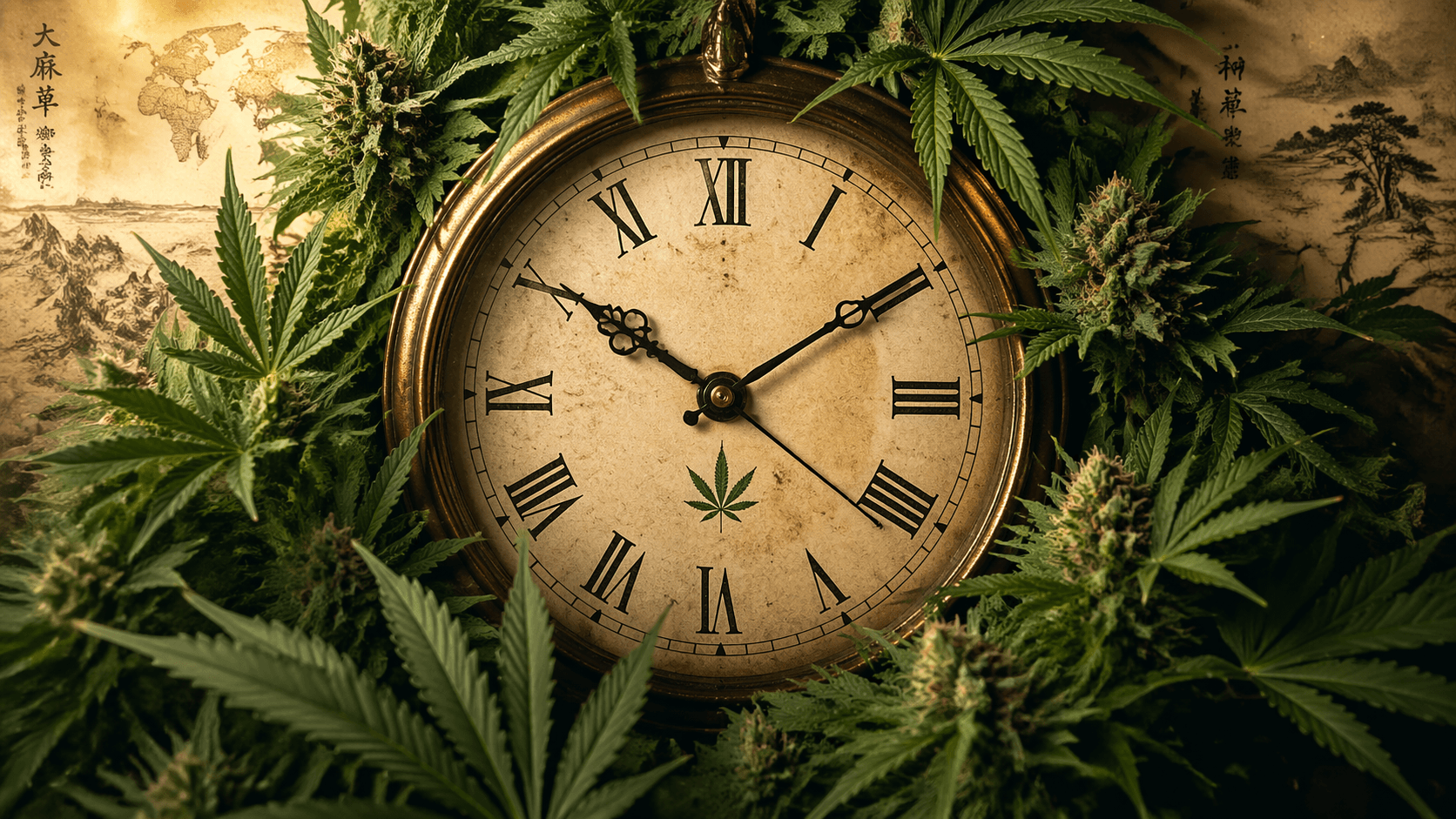
Millennia of Cannabis Knowledge Lost to Prohibition and Rediscovered by Modern Science
Generations of cannabis knowledge and therapeutic use have been lost to prohibition, but renewed scientific interest and shifting laws are driving a reexamination of its vast historical promise
Key Points
- 1Cannabis has been cultivated and used for over 10,000 years for fiber, food, and ritual purposes
- 2Ancient Chinese and Indian texts documented cannabis’s medicinal and psychoactive properties millennia ago
- 3Western scientific study of cannabis began in the 19th century, highlighting its analgesic and psychoactive effects
- 420th-century prohibition and international treaties severely restricted cannabis research and changed public perception
- 5Recent legal and scientific shifts are reopening discussions about cannabis’s therapeutic potential and regulation
Cannabis has played a significant role in human history, offering psychoactive effects such as euphoria, relaxation, and heightened creativity for thousands of years. Archaeological evidence traces its cultivation back over 10,000 years in regions of modern-day China, Mongolia, and Kazakhstan, where it served as a source of fiber, food, and ritualistic use. Despite its ancient roots, the systematic medicinal applications of cannabis were only documented much later, beginning with the legendary Chinese Emperor Shen Nung, who is credited with introducing cannabis as a remedy for various ailments
The earliest Chinese pharmacopoeia, the 'Shen Nung Pen Ts’ao Ching,' compiled in the first century BCE, prescribed female cannabis flowers for pain, malaria, and gynecological disorders, and considered the plant both safe and effective. While psychoactive effects were mentioned—such as causing one to 'see demons'—these experiences were largely confined to shamanic rituals. As spiritual practices faced restrictions during the Shang dynasty, many shamans migrated to India, where cannabis became deeply integrated into religious and therapeutic traditions, notably referenced as 'bhanga' in the sacred 'Atharva Veda.'
It was not until the 19th century that Western scientists began to formally study cannabis. Pioneers such as Irish chemist William Brooke O’Shaughnessy and French psychiatrist Jacques-Joseph Moreau introduced cannabis to European medicine and culture, documenting its analgesic and psychoactive properties. Moreau, reflecting on the drug’s mind-altering effects, remarked, “The dream is an in-between land where the external life ends, and the internal life begins.” These early studies laid the groundwork for cannabis’s use among artists and intellectuals in 19th-century Paris and later among American jazz musicians and counterculture movements
Despite its long-standing reputation as a therapeutic and recreational substance, cannabis faced a dramatic shift in perception and legality in the 20th century. The 1937 Marihuana Tax Act in the United States, fueled by a moral panic led by Harry Anslinger, made research prohibitively expensive and risky, leading to its removal from the U.S. Pharmacopeia in 1941. Internationally, the 1961 Single Convention on Narcotic Drugs placed cannabis in the most restrictive category, Schedule I, severely limiting scientific inquiry and reinforcing the stigma against its medicinal value
Only in recent decades has the scientific community begun to revisit cannabis’s therapeutic potential, such as the FDA approval of CBD for childhood epilepsy in 2020—over four decades after its efficacy was first demonstrated in clinical trials. According to High Times, “most of the effects of cannabis that are only now being studied are hardly new.” Yet, ongoing federal restrictions, particularly the U.S. DEA’s Schedule I classification, continue to impede research. Lawmakers are now actively debating the descheduling and decriminalization of cannabis to foster much-needed scientific exploration
From the OG Lab newsroom perspective, the story of cannabis is one of lost knowledge and missed opportunities driven by legal and cultural barriers. As more jurisdictions reconsider prohibition, the industry stands at a pivotal moment to reclaim centuries of empirical wisdom and apply rigorous research to unlock cannabis’s full potential. Stakeholders should watch closely as regulatory and scientific landscapes evolve, potentially reshaping the future of cannabis medicine and policy