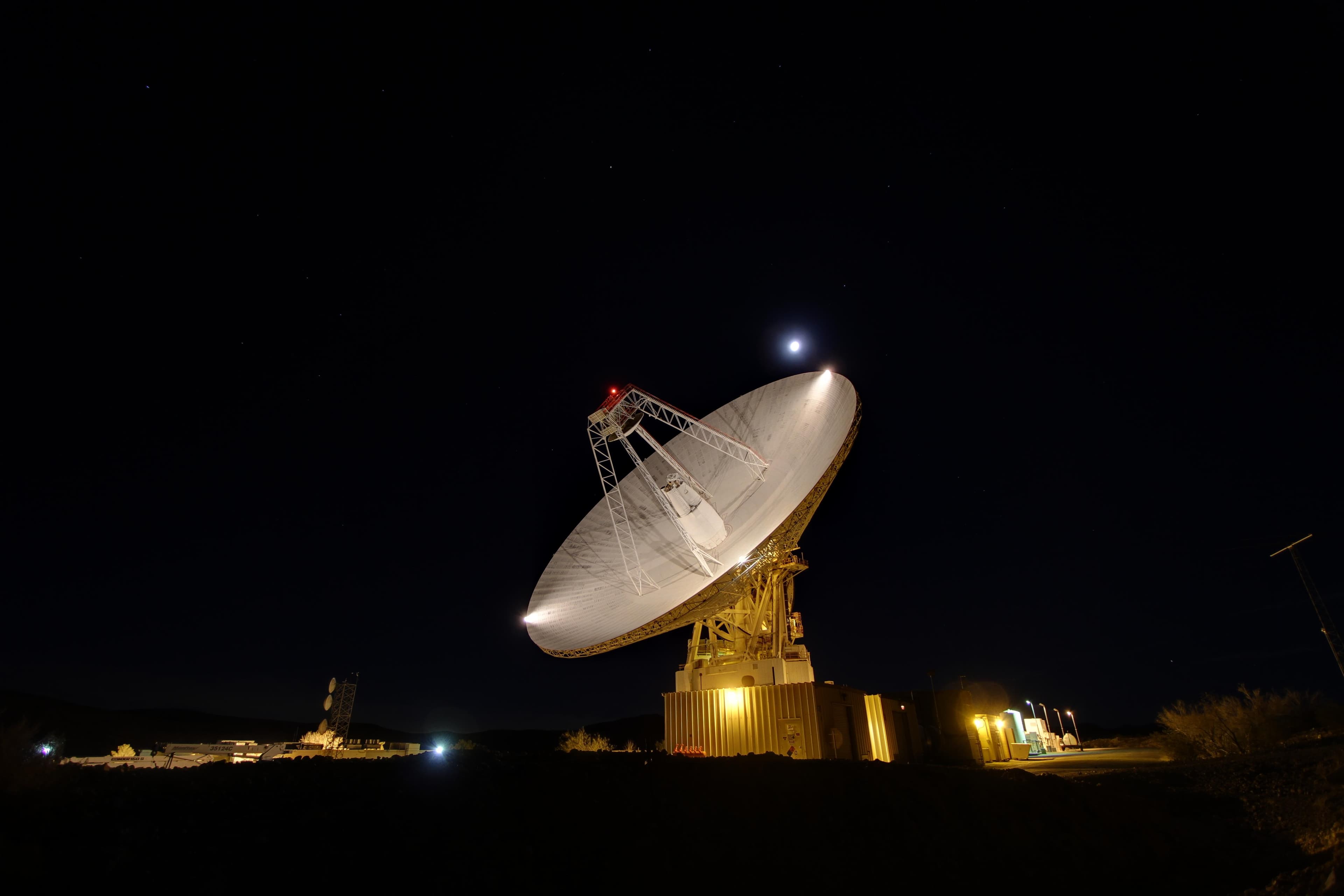
NASA-Funded Lab Reports 'Anomalous Signal Reception' During Cannabis Terpene Trials
Preliminary findings from a CalTech research team suggest that a specific cannabis terpene profile may produce measurable neural oscillation patterns described as "consistent with structured external signal reception."
Key Points
- 1A controlled CalTech study reported unusual gamma-wave synchronization in 42 participants under terpene Profile C
- 2Researchers say the findings point to a previously undocumented receptive brain state and require peer review
A research team at the California Institute of Technology, working under a grant from NASA's Innovative Advanced Concepts program (NIAC), has released preliminary findings suggesting that certain cannabis terpene profiles may produce measurable and repeatable changes in human neural oscillation patterns — changes described in one internal memo as "consistent with structured external signal reception."
The study, designated internally as Project COSMIC (Consciousness-Oriented Signal Mapping In Cannabinoid environments), has not yet undergone formal peer review. However, portions of the findings were presented at a closed session of the American Neurological Association symposium in San Diego this February, according to two attendees who spoke on condition of anonymity.
Over an 18-month period, 42 participants were exposed to precisely calibrated cannabis terpene profiles in controlled, sensory-reduced environments while undergoing continuous 256-channel EEG monitoring and fMRI scanning. The terpene combinations were administered via medical-grade vaporization at sub-psychoactive doses. Participants were not intoxicated in any conventional sense.
The study examined three terpene profiles: Profile A (high limonene, low myrcene), Profile B (balanced pinene and linalool), and Profile C — an experimental blend of high-limonene and high-pinene with trace amounts of beta-caryophyllene.
Dr. Elena Vasquez, the project's principal investigator and a neuroscientist at CalTech, emphasized the rigor of the methodology: "Every session was double-blind, placebo-controlled, and monitored by independent observers. We were initially investigating whether specific terpene ratios could enhance cognitive focus and pattern recognition for astronaut training scenarios."
Results for Profiles A and B were unremarkable — modest improvements in alpha-wave coherence, consistent with existing literature on limonene's anxiolytic properties. Profile C, however, produced what the team described as results "outside any previously documented parameter."
Subjects exposed to Profile C displayed sudden, sustained gamma-wave synchronization across both hemispheres at frequencies between 40 and 100 Hz, lasting anywhere from 12 to 47 minutes. Coherent geometric pattern recognition in randomized visual noise increased to 340 percent above baseline. Most notably, seven subjects independently reported a sensation of "receiving structured information" rather than generating internal thought.
In those seven subjects, the EEG patterns revealed what Dr. Vasquez termed "phase-locked oscillations with no identifiable internal origin."
"To be absolutely clear," Dr. Vasquez stated during a recorded Q&A session, "we are not claiming contact with non-human intelligence. What we are observing is that under Profile C exposure, the brain enters a receptive state that does not correspond to any known model of endogenous neural activity. The oscillation patterns appear to synchronize with something external. We simply do not yet know what."
The terpene Profile C was reverse-engineered from a specific cannabis cultivar grown at a partner facility in Humboldt County, Northern California. The strain — an experimental OG Kush phenotype — was selected through four years of terpene-directed breeding for its unusually sharp citrus-pine signature and minimal sedative effects. Lab personnel began referring to it informally as "Cosmic OG."
When asked about the name at the symposium, Dr. Vasquez reportedly smiled: "It started as a joke in the lab. After 18 months of data, no one is laughing anymore."
The most provocative element of the findings involves what the team has designated the External Signal Hypothesis. Post-hoc analysis of EEG recordings revealed that the anomalous gamma-wave patterns across multiple subjects showed temporal correlation — that is, subjects tested on entirely different days produced nearly identical oscillation signatures within the same narrow time windows.
Dr. James Chen, a signal processing specialist at MIT who was brought in to independently verify the data, confirmed the correlation. "The probability of seven independent subjects producing phase-locked 47.3 Hz oscillation signatures within the same temporal window, by chance alone, is approximately one in ten to the fourteenth power," he wrote in his assessment. "Something is driving this synchronization, and it is not originating inside the subjects' own neural systems."
The research team is now collaborating with scientists at the SETI Institute to cross-reference the anomalous EEG timestamps with observational data from the Allen Telescope Array in Hat Creek, California.
An anonymous source within the project told science reporters: "Nobody wants to be the person who says the word 'aliens' in a NASA-funded lab. But we have systematically ruled out equipment malfunction, ambient electromagnetic interference, and statistical artifact. What remains is either a fundamental discovery about human consciousness, or something for which we do not yet have adequate scientific language."
If the findings survive peer review, the implications would extend well beyond cannabis research. The suggestion that human neural architecture might function as a tunable receiver — capable of detecting structured information from outside conventional sensory channels, triggered by specific neurochemical conditions — would represent a paradigm shift in both neuroscience and communication theory.
Instead of broadcasting electromagnetic signals into space and waiting decades for a response, humanity might already possess the biological hardware needed to detect signals that have been present all along. Not transmitting — but listening.
The research paper is expected to be submitted to Nature Neuroscience by the third quarter of 2026. NASA's Office of Communications issued a brief statement: "The agency supports a broad portfolio of innovative research through its grant programs and does not comment on preliminary findings prior to peer review."
Happy April 1st. No, NASA is not using cannabis to phone ET — but we enjoyed imagining what the headlines might look like if they were. The real science of terpenes, however, is fascinating enough on its own. Explore the latest cannabis research in our news section and blog.
Image: NASA/JPL-Caltech (PIA06207).