Thailand Deploys AI-Powered SERS-TB Tool to Accelerate Latent Tuberculosis Screening
Thailand has introduced the SERS-TB system, an AI-powered tool that rapidly screens for latent tuberculosis, aiming to boost early detection and improve access to TB diagnostics in rural communities
Key Points
- 1Thailand launched the SERS-TB system to screen for latent tuberculosis using AI and portable spectrometers
- 2The project is led by NSTDA, Nectec, Khon Kaen University, Roi Et Hospital, and Health Region 7 agencies
- 3SERS-TB reduces testing time from days to under an hour, with some results available in minutes
- 4Field demonstrations were held in Roi Et and Khon Kaen from May 24–26, 2026
Thailand's health sector is embracing cutting-edge technology in the fight against latent tuberculosis (LTBI) with the rollout of an artificial intelligence-assisted screening system called SERS-TB. Developed by the National Science and Technology Development Agency (NSTDA) and the National Electronics and Computer Technology Center (Nectec), this initiative is a collaboration with Khon Kaen University, Roi Et Hospital, and public health agencies in Health Region 7. The goal is to significantly reduce tuberculosis rates in Thailand's Northeast by 2035, addressing a persistent health challenge in the region
The SERS-TB system leverages Surface-Enhanced Raman Spectroscopy (SERS) and portable Raman spectrometers, combined with AI-powered analysis, to screen blood samples for signs of latent TB. Using a nano-structured silver chip, the system amplifies biomolecular signals in blood plasma, enabling rapid detection. "The system was designed as a point-of-care screening tool to help reduce healthcare workers' workloads and improve access to TB screening in communities," said Noppadol Nantawong, a Nectec researcher. Traditional lab methods can take up to two days, but this new technology can deliver results in under an hour, sometimes within minutes
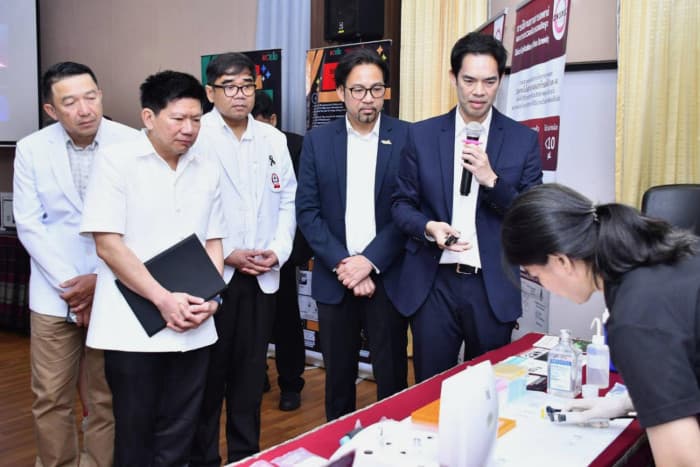
Field demonstrations of the prototype took place from May 24 to 26 in Roi Et and Khon Kaen, bringing the technology directly to local hospitals and communities. Dr Wipa Reechaipichitkul of Khon Kaen University's Faculty of Medicine highlighted the system's potential to make screening "faster and more accessible, particularly in remote areas." Dr Narongchai Sungsa, Director of Roi Et Hospital, noted that real-world testing would help refine the technology for integration into hospital workflows
OG Lab notes that this AI-driven screening tool represents a major step forward for public health in Thailand, particularly for rural communities where access to fast, reliable diagnostics is often limited. As the technology is adapted and scaled, it could set a new standard for infectious disease screening across Southeast Asia, offering hope for more timely intervention and improved outcomes