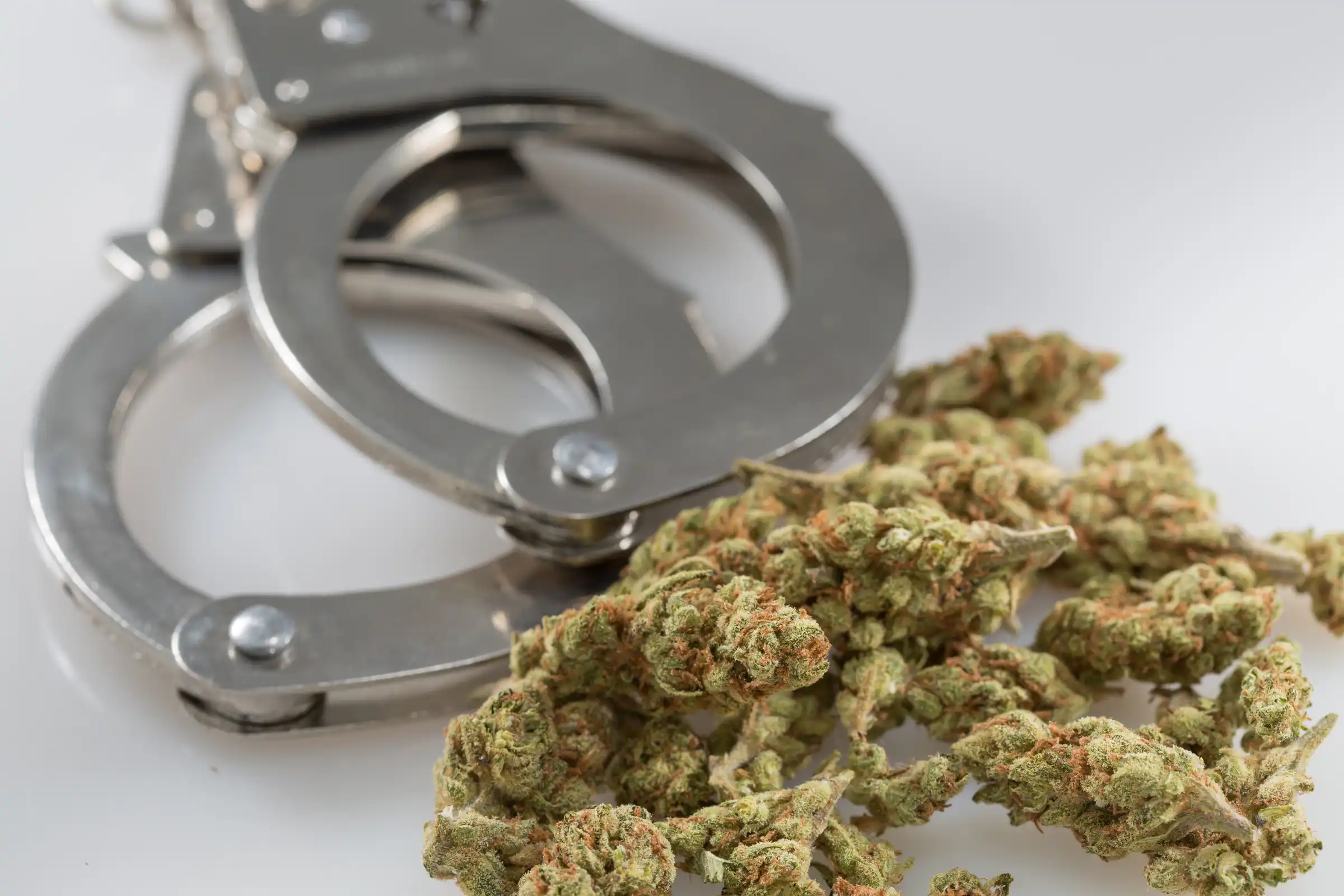
West Virginia Supreme Court Reviews Whether Marijuana Odor Alone Justifies Home Searches
The West Virginia Supreme Court is considering whether the smell of marijuana alone can justify police searches of homes, a decision that could reshape search and seizure standards statewide
Key Points
- 1The West Virginia Supreme Court is reviewing whether marijuana odor alone constitutes probable cause for home searches
- 2A lower court suppressed evidence found after police conducted a sweep based on marijuana odor, halting prosecution
- 3State prosecutors argue that existing precedent allows searches based on marijuana smell, while the defense cites changing cannabis laws
- 4Medical marijuana has been legal in West Virginia since 2017, and all bordering states have legalized medical or recreational cannabis
- 5The Supreme Court's decision, expected by June 11, could set a significant precedent for cannabis-related search laws
The Supreme Court of Appeals of West Virginia is weighing a precedent-setting case that could redefine the role of cannabis odor in law enforcement searches of private homes. The case centers on whether the smell of marijuana, by itself, is sufficient probable cause for police to obtain a warrant and conduct a search. This legal challenge follows a Berkeley County Circuit Court decision to suppress evidence found during a police search after officers detected a 'strong odor' of marijuana at a Martinsburg residence. The outcome could have far-reaching implications for policing practices and Fourth Amendment protections in the state
The controversy began in 2020 when Martinsburg police, responding to a report of a suicidal woman, entered Aaron Lewis's backyard during their search for the individual. Police did not find the woman, but upon visiting Lewis’s home, they claimed to detect a strong marijuana odor. Despite Lewis’s son refusing permission for a search, officers entered the home for what they described as a 'protective sweep,' discovering cash and leafy substances. Afterward, a search warrant was obtained based on the smell and these initial findings, leading to the seizure of marijuana, heroin, crack cocaine, firearms, and cash
The defense, led by attorney Cameron LeFevre, argued that the initial warrantless sweep violated the Fourth Amendment and that without evidence from this sweep, only the smell of marijuana remained as justification for the warrant. Circuit Judge Debra McLaughlin agreed, ruling that the odor alone did not establish probable cause for searching the home for illegal drugs beyond marijuana. As a result, the evidence was suppressed, halting prosecution efforts. 'There’s no inherent logical connection or nexus between the smell of marijuana and unlawful activity anymore, and there’s a good reason for that,' LeFevre told the court, referencing shifting cannabis laws
The state of West Virginia is now appealing to the Supreme Court, seeking a writ of prohibition to overturn the suppression. Assistant Attorney General Holly Mestemacher argued that 'the odor of marijuana provides probable cause for a search,' and criticized the circuit court for setting an excessively high standard. 'It’s effectively a death knell to our ability to prosecute, because the court elevated that standard required far more than has ever been required by law,' Mestemacher stated, underscoring the prosecutorial concern over the precedent this case could establish
This case unfolds against a backdrop of evolving cannabis laws in West Virginia and neighboring states. Medical marijuana has been legal in West Virginia since 2017, and all bordering states now allow either medical or recreational cannabis use. While federal courts have traditionally upheld marijuana odor as probable cause, several state courts are reexamining this stance due to changing legal and social landscapes. LeFevre urged the Supreme Court to avoid broad rulings in this instance, emphasizing the unique procedural posture and incomplete record of the case, but also argued that if the court does address the issue, it should find that marijuana odor alone is insufficient for probable cause
From the OG Lab newsroom perspective, this case could set a new legal standard for cannabis-related searches in West Virginia and potentially influence other jurisdictions facing similar questions. As more states relax cannabis restrictions, the legal link between marijuana odor and criminality is increasingly contested. The Supreme Court's forthcoming decision, expected before June 11, will be closely watched by legal experts, law enforcement, and cannabis advocates for its potential to reshape search and seizure law in the era of cannabis reform