Adenium obesum (Wüstenrose)
Wüstenrose — sukkulent aus Ostafrika und Arabien. Milchsaft ist giftig; der aufgetriebene Caudex bildet mit dem Alter skulpturale Bonsai-Formen.
Quick Answer
Adenium obesum ist ein sukkulenter Strauch aus Ostafrika und Arabien (Apocynaceae). Giftiger Milchsaft; der Caudex nimmt mit dem Alter Bonsai-ähnliche Formen an. Trichterförmige Blüten, meist rosa oder rot.
TL;DR | Quick Summary
Herkunft und Familie
Adenium obesum (Wüstenrose) ist ein sukkulent-strauchiger oder kleiner Baum der Familie Hundsgiftgewächse (Apocynaceae), heimisch in Ostafrika, dem südlichen Afrika und der Arabischen Halbinsel. Es wächst in trockenen und halbtrockenen Landschaften, oft auf felsigen Hängen.
Giftiger Milchsaft und traditionelle Nutzung
Wie viele Apocynaceae produziert Adenium einen Milchsaft mit Herzglykosiden. Der Saft ist giftig; in Ostafrika wurde er traditionell auf Pfeilspitzen zur Jagd aufgetragen. Hände nach Kontakt mit Schnittstellen waschen.
Der Caudex — eine lebende Skulptur
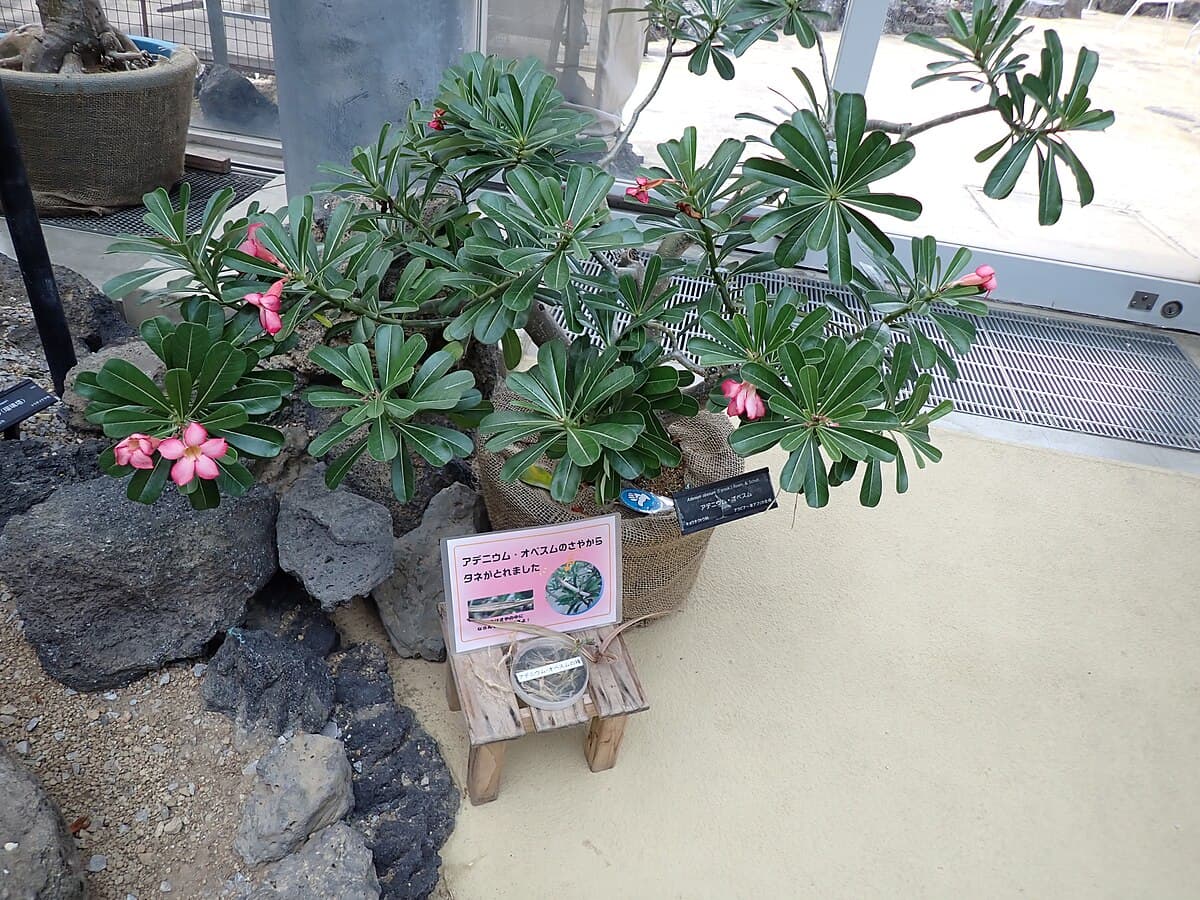
Die aufgetriebene Stammbasis und die Wurzeln bilden einen wasserspeichernden Caudex. Mit den Jahren entwickelt er bemerkenswerte skulpturale Formen — knorrig, bulbös, einem alten Miniaturbaum ähnlich. Züchter kultivieren ihn als lebenden „Wüstenbonsai" und heben den Caudex bewusst über die Erdoberfläche.
Im Botanischen Garten
In unserer Sammlung verdeutlicht Adenium Anpassungsstrategien an die Trockenheit. Volle Sonne, schnell drainierender Boden und vorsichtiges Wässern sind nötig. In der Wärme trägt er trichterförmige Blüten — meist rosa oder rot, in Kultivaren sehr variabel.
Dieser Artikel dient ausschließlich der Information.