הלילה ששינה את המוזיקה: הביטלס, דילן וחדר מלון בדלמוניקו
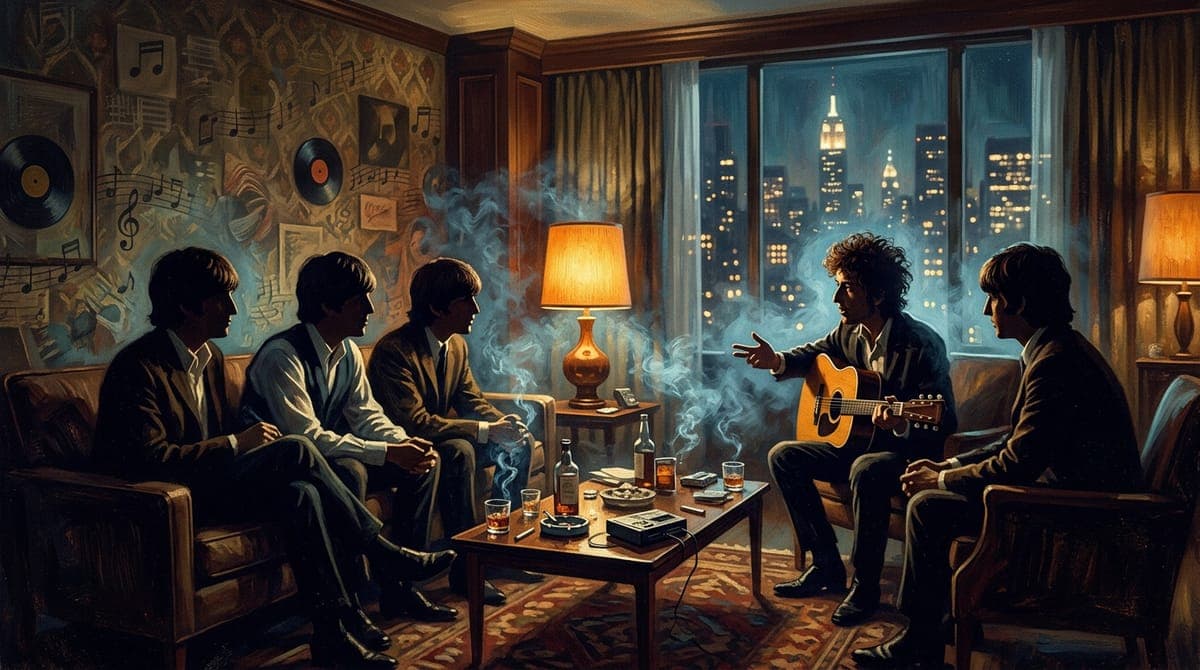
אוגוסט 1964. ניו יורק. ארבעה בחורים מליברפול פוגשים משורר ממינסוטה בסוויטה במלון דלמוניקו. דילן משוכנע שהם "כבר בעניין" — הוא טועה. ערב אחד, מילה ששמעו לא נכון, ואחד הלילות החשובים ביותר בתולדות מוזיקת הפופ.
Quick Answer
באוגוסט 1964 בוב דילן נפגש עם הביטלס במלון דלמוניקו בניו יורק. דילן חשב שהם שרים «I get high» אבל בעצם זה היה «I can't hide». הערב ההוא היה תחילת הטרנספורמציה היצירתית — מלהיטי פופ ל-Rubber Soul, Revolver ו-Sgt. Pepper's.
TL;DR | Quick Summary
יש אירועים שלא נכנסים לאף ספר לימוד, אבל אחריהם העולם נשמע אחרת. אוגוסט 1964, ניו יורק, מלון דלמוניקו על פארק אבניו. בסוויטה בקומות העליונות יושבים ארבעה בחורים מליברפול — כבר הלהקה הפופולרית ביותר על פני כדור הארץ — ומשורר מזוקן אחד מהיבינג, מינסוטה, שלא מזמן ניגן בבתי קפה בגריניץ' וילג' תמורת עשרה דולר לערב. שמם — The Beatles ו-Bob Dylan. והערב ההוא שינה את צליל המוזיקה המערבית.
איך הם הגיעו לאותו חדר
עד אוגוסט 1964 הביטלס כבר כבשו את אמריקה. תוכנית אד סאליוון, 73 מיליון צופים, טירוף כרטיסים. דילן חי ביקום אחר: מועדוני פולק, שירת מחאה, «Blowin' in the Wind». שני קטבים — פופ מושלם ואנדרגראונד אינטלקטואלי.
האיש שחיבר ביניהם היה העיתונאי אל ארונוביץ (Al Aronowitz), חבר של דילן ואחד מעיתונאי הרוק הראשונים של ניו יורק. הוא כתב ל-New York Post ול-Saturday Evening Post וחלם מזמן להכיר בין שני האמנים האהובים עליו. כשהביטלס הגיעו לסיבוב הופעות — הרגע הגיע.
לפי זיכרונותיו של ארונוביץ, דילן היה עצבני בהתחלה. בשבילו הביטלס היו «הבחורים עם התסרוקות» — הוא לא לקח אותם ברצינות מיד. אבל המוזיקה שלהם כבר תפסה אותו, והוא הסכים לפגישה.
«I Can't Hide» מול «I Get High»
כאן מתחיל אחד הסיפורים הגדולים ביותר של הרוקנרול.
דילן היה משוכנע שהביטלס כבר מעשנים קנאביס. למה? כי בשיר «I Want to Hold Your Hand» הוא שמע: «I get high, I get high, I get high.»
כשהציע לחלוק, התברר שהביטלס שרים בעצם «I can't hide.» הם לא רק לא עישנו קנאביס באופן קבוע — הם כמעט לא הכירו אותו.
העיתונאי הווארד סאונס תיאר את הרגע בביוגרפיה של דילן Down the Highway: דילן הופתע באמת. הוא הניח שכוכבי הפופ כבר בעניין, והם התגלו, לפי הסטנדרטים שלו, כטירונים גמורים.
מה קרה אחר כך
ארונוביץ סיפר מאוחר יותר (וחזר על כך בראיונות רבים) שהוא היה זה שגלגל את הג'וינט — והעביר אותו לרינגו סטאר. רינגו, כמנחה הלא-רשמי של הלהקה, ניסה ראשון.
«רינגו לא הכיר את הנוהל — הוא עישן את כל הג'וינט לבד במקום להעביר הלאה.» — אל ארונוביץ, מראיונות ארכיון
אחר כך — ג'ון, פול, ג'ורג'. החדר הפך רועש, שמח ולדברי המשתתפים עצמם — מוזר. פול מקרטני כנראה הלך אחרי הרואדי מאל אוונס וביקש ממנו לרשום את מחשבותיו כי הוא «חושב באמת בפעם הראשונה בחייו». בבוקר הפתקים התגלו כשטויות — אבל תחושת ה«גילוי» נשארה.
הביוגרף בוב שפיץ, בספר The Beatles (2005, Simon & Schuster), מספק שחזור מפורט של הערב, מבוסס על ראיונות עם ארונוביץ והמשתתפים עצמם. הטון אינו של רכילות אלא של נקודת מפנה תרבותית.
למה זה יותר מאנקדוטה
אחרי 1964 המוזיקה של הביטלס השתנתה — וזו לא פרשנות, אלא עובדה.
לפני:
-
«She Loves You», «I Want to Hold Your Hand» — להיטי פופ ישירים ואנרגטיים
-
מבנה ברור: בית-פזמון, 2:30, נושא — אהבה וריקוד
אחרי:
-
Rubber Soul (1965) — הטקסטים הראשונים עם חיפוש פנימי, מרקמים אקוסטיים, השפעת פולק
-
Revolver (1966) — ניסויי אולפן, הקלטות הפוכות, כלים הודיים, «Tomorrow Never Knows»
-
Sgt. Pepper's Lonely Hearts Club Band (1967) — האלבום שאחריו הרוק הפך לאמנות
במקביל דילן השתנה: הוא חיבר גיטרה חשמלית (מה שהזעים פוריסטים של פולק), התחיל להתנסות עם צליל, והקליט את Bringing It All Back Home ואת Highway 61 Revisited. ההשפעה הייתה הדדית.
דלת, לא הסיבה
זה יהיה פשטני לומר «ערב אחד → גאונות». הביטלס כבר היו על סף שינוי. הם נמאסו מהנוסחה. ג'ון לנון אמר לג'אן וונר (Rolling Stone, 1970): «כבר הרגשנו שגדלנו מעבר לשירים האלה, עוד לפני דילן.»
אבל ההקשר חשוב:
-
סצנת האמנות הלונדונית — Indica Gallery, ג'ון דנבר, בארי מיילס
-
פילוסופיה ומדיטציה — מאוחר יותר מהרישי
-
התרבות הנגדית — מדור הביט לתנועת ההיפים
-
פסיכדליה — LSD נכנס לחייהם רק אחרי הקנאביס
קנאביס היה דלת — לא במובן של «חומר קסום», אלא ברגע שבו התודעה מרשה לעצמה לראשונה לעבוד אחרת. כשמבינים: אפשר לא להיצמד לנוסחה. אפשר לחשוב רחב יותר. אפשר להיות מוזר.
מה דילן עצמו אמר
בראיון לסרט התיעודי של מרטין סקורסזה No Direction Home (2005), דילן נזכר בפגישה בלי דרמה:
«חשבתי שהם כבר עשו את זה. התברר שלא. אז פשוט... שיתפנו.»
בלי תיאטרון. בשבילו זה היה חילופי תרבות — לא «השחתת תמימים». שני עולמות נפגשו, ושניהם יצאו שונים.
לא «מי הציע מה», אלא מתי הכל התכנס
מנקודת מבט רחבה יותר, שלושה זרמים הצטלבו בחדר המלון ההוא בדלמוניקו:
- מוזיקת פופ — מלודיה, אנרגיה, קהל המוני
- שירה ופולק — עומק, מחאה, עולם פנימי
- תרבות נגדית — קנאביס כחלק ממבט חדש על התודעה
ב-1964 הזרמים האלה עדיין זרמו במקביל. אחרי הלילה ההוא הם התחילו להתמזג. התוצאה לא הייתה רק המוזיקה של הביטלס ודילן, אלא עידן שלם: רוק פסיכדלי, Summer of Love, אלבומי קונספט, האולפן ככלי נגינה. כל מה שאנחנו קוראים לו היום «קלאסיק רוק» צמח מנקודת ההצטלבות הזו.
העובדות פשוטות. ארבעה בחורים מליברפול פגשו משורר ממינסוטה, והמשורר שיתף את הקנאביס שלו. אבל לפעמים חדר אחד, ערב אחד ומילה ששמעו לא נכון משנים את הכיוון של תרבות שלמה.
עוד סיפורים על איך קנאביס שזור בתרבות ובעולם הכוכבים — בבלוג שלנו. ואם סקרנים מי עוד בין הכוכבים דיבר בגלוי על מריחואנה, קראו «סלבריטאים שכנראה אוהבים גראס».
מאמר זה הוא למטרות מידע בלבד ומבוסס על ביוגרפיות, סרטים תיעודיים וראיונות שפורסמו. שימוש אחראי וציות לחוקים המקומיים הם באחריותכם.
📚Sources & References
- 1Bob Spitz — The Beatles: The Biography (Simon & Schuster, 2005)
- 2Howard Sounes — Down the Highway: The Life of Bob Dylan (Grove Press, 2001)
- 3Rolling Stone — How the Beatles Got Stoned (2014)
- 4The Guardian — When Bob Dylan met the Beatles (2018)
- 5Al Aronowitz — Bob Dylan and the Beatles, NYPost archive
- 6Martin Scorsese — No Direction Home (documentary, 2005)