Petrea volubilis — Queen's Wreath
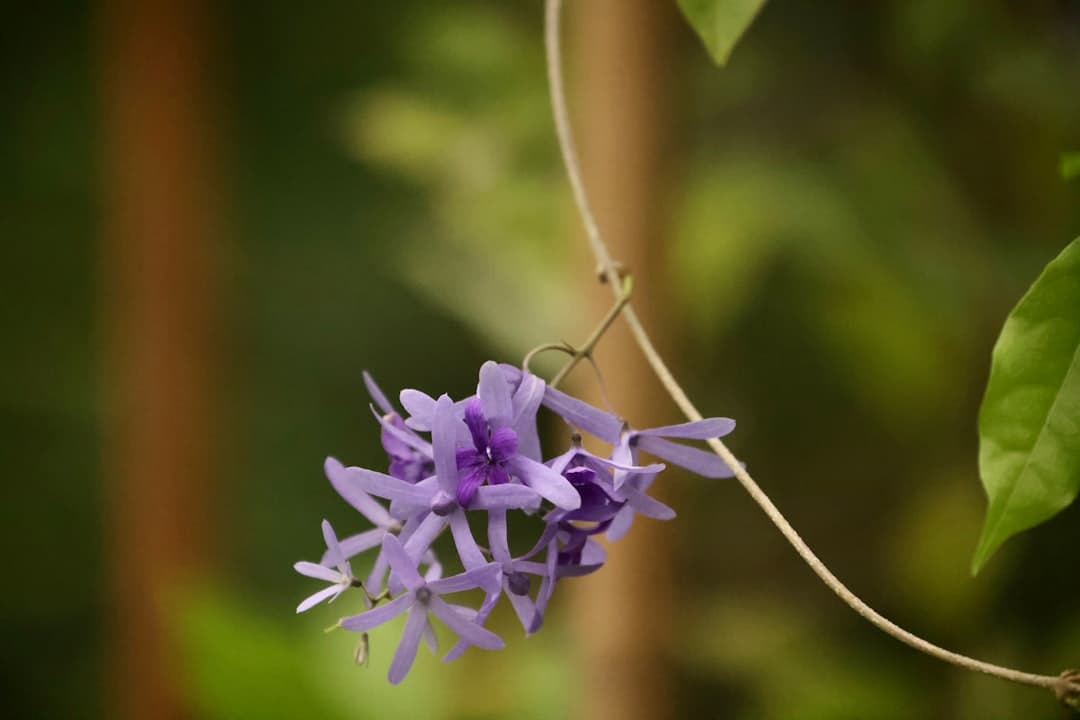
Tropical climbing vine from Central America with cascading lilac-purple flowers. The star-shaped calyx persists after petals fall, turning silvery-lavender.
Quick Answer
Petrea volubilis (Verbenaceae) is a tropical climbing vine from Central America with lilac-purple flowers. The star-shaped calyx persists after petals fall. Common names: Queen's Wreath, Sandpaper Vine.
TL;DR | Quick Summary
Origin and family
Petrea volubilis is a semi-deciduous to evergreen climber in the Verbena family (Verbenaceae), native to Mexico, Central America and northern South America. In tropical gardens it adorns arches, pergolas and fences with spectacular flowering sprays.
Double beauty: flowers and calyces
Each flower consists of a larger star-shaped lilac calyx surrounding five smaller deep-purple petals. After the petals drop, the papery calyx persists for weeks, fading to a soft silver-lavender — giving the plant its characteristic "double flowering" appearance.
Common names
In English the plant is known as Purple Wreath, Queen's Wreath and Sandpaper Vine — the last referring to the rough, sandpaper-textured surface of the leaves. Each name captures a different aspect of this versatile climber.
Blooming and conditions
In tropical climates Petrea blooms several times per year, typically in spring and autumn. It prefers full sun and well-drained soil. Given a sturdy support, it quickly covers it in cascading racemes up to 30 cm long.
In the botanical garden
The Petrea arch is one of the most photogenic spots in our garden and an important nectar source for pollinators. The plant also appears in traditional folk medicine practices across its native range.
This article is for informational purposes only.