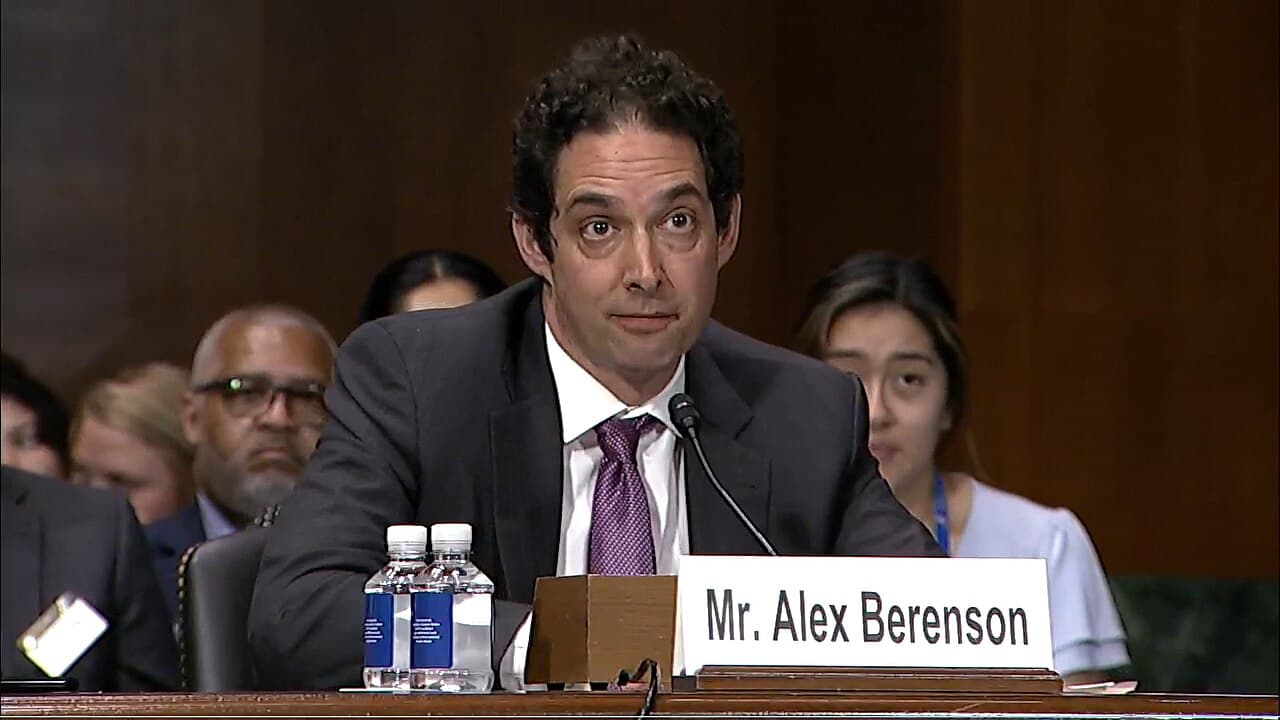
Anti-Cannabis Advocates Continue to Profit Despite Failed Predictions and Contradictory Evidence
Despite widespread cannabis legalization and declining crime rates, anti-cannabis advocates such as Alex Berenson continue to profit and influence debate, even as their predictions are contradicted by years of evidence
Key Points
- 1Alex Berenson predicted cannabis legalization would cause surges in violent crime and mental health crises, but six years of data have not supported these claims
- 2The FBI reported a 4.5% decline in violent crime and a 14.9% drop in murder from 2023 to 2024, contradicting catastrophic forecasts
- 3Berenson’s newsletter Unreported Truths has over 236,000 subscribers, generating significant revenue despite his predictions being disproven
- 4Academic experts and researchers have publicly disputed Berenson’s claims, calling them misinterpretations of scientific evidence
- 5Legalization has led to significant reductions in cannabis possession arrests, shrinking the criminal justice footprint of marijuana enforcement
The persistence of anti-cannabis advocacy in the United States reveals a complex interplay of economic incentives, media influence, and narrative resilience. Despite dire predictions about cannabis legalization leading to surges in violent crime and mental health crises, extensive data over the past six years have not borne out these fears. According to High Times, the case of writer Alex Berenson illustrates how prohibitionist narratives can remain profitable even after being empirically disproven. Berenson, once a New York Times reporter, published his 2019 book 'Tell Your Children,' warning of cannabis-induced psychosis and violence, only to see legalization expand to 24 states with no corresponding disaster
Berenson’s predictions of societal collapse failed to materialize, as crime rates in legalization states did not spike and national data showed a decline in violent crime. The FBI reported a 4.5% drop in violent crime and a 14.9% decrease in murder and non-negligent manslaughter between 2023 and 2024. Additionally, federal surveys indicate that adolescent marijuana use remains low relative to previous decades. Instead of the predicted mental health catastrophe, healthcare studies have found only narrowly defined increases in psychosis-related emergencies, primarily among men aged 25–34 in states with weak regulation of high-potency THC products. "To say that we concluded cannabis causes schizophrenia is just wrong — and it’s meant to precipitate fear," said Dr. Ziva Cooper, a National Academies committee member
Despite being contradicted by data and public health experts, Berenson’s media presence and revenue streams remain robust. His Substack newsletter, Unreported Truths, boasts over 236,000 subscribers, with paid tiers generating estimated revenues in the low-to-mid six figures annually. Berenson’s continued appearances on major platforms such as Fox News and his speaking engagements add to his financial sustainability. High-profile media coverage, including simultaneous features in The New York Times, The Wall Street Journal, and The New Yorker, helped cement his status as a leading contrarian voice, briefly influencing policy debates even as legalization proceeded in states like Illinois
The scientific and academic communities have consistently challenged Berenson’s interpretations, with multiple scholars and clinicians publicly disputing his claims as misrepresentations of research. Open letters from experts at institutions like Columbia, Harvard, and NYU criticized his work as “based on a deeply inaccurate misreading of science.” While some studies highlight the need for regulation of high-potency cannabis products, most evidence points to the importance of market design and product controls rather than prohibition. Research suggests that medicalized regulatory models correlate with better mental health outcomes, and legalization has led to marked reductions in cannabis-related arrests—often by 40–80%—thereby shrinking the criminal justice impact of marijuana enforcement
Berenson’s refusal to adjust his position, even as evidence accumulates, underscores the role of financial incentives in sustaining outdated narratives. As he asserted in a 2025 interview, “I think the book is its own best evidence.” According to High Times, this highlights a broader trend in subscriber-driven media, where maintaining audience loyalty often outweighs updating positions based on facts. For the global cannabis industry, this development signals the enduring power of narrative over data in public discourse. OG Lab notes that as legalization advances and empirical evidence mounts, industry stakeholders should remain vigilant about the persistence of influential but unsupported claims in shaping policy and public perception