Cannabis Pre-Roll Quality Improves With Advanced Manufacturing, Says PreRoll-Er
PreRoll-Er has introduced new manufacturing technologies to address common quality issues in cannabis pre-rolls, aiming to deliver a smoother and more reliable smoking experience for consumers
Key Points
- 1Pre-roll quality issues are often due to outdated knock-box production methods
- 2PreRoll-Er developed the Spin-Er and PR200 to improve packing consistency using centrifugal force and layered compaction
- 3Patrick Grenier of PreRoll-Er emphasized the need to respect the plant by engineering better pre-rolls
- 4Advanced manufacturing aims to restore consumer trust and set new industry standards for pre-roll quality
Pre-rolled cannabis joints remain one of the most popular and accessible forms of cannabis consumption, but consumer frustration over inconsistent quality continues to plague the market. According to industry experts, the main culprit is not the pre-roll format itself, but outdated manufacturing practices that fail to account for the complexities of cannabis flower. "Pre-rolls do not suck. Poorly made pre-rolls suck," industry professionals emphasize, challenging the widespread belief that pre-rolls are inherently flawed
The most common complaints about pre-rolls—clogging, canoeing, uneven burns, and repeated relighting—stem from poor airflow and inconsistent packing. Many producers still rely on knock-box style production, a method that simply shakes flower into a cone, leading to uneven density and unpredictable results. From the outside, these products may appear uniform, but inside, airflow can be compromised, resulting in a disappointing smoking experience. "When brands rely on outdated filling methods with no real density control, the consumer pays the price," the report notes
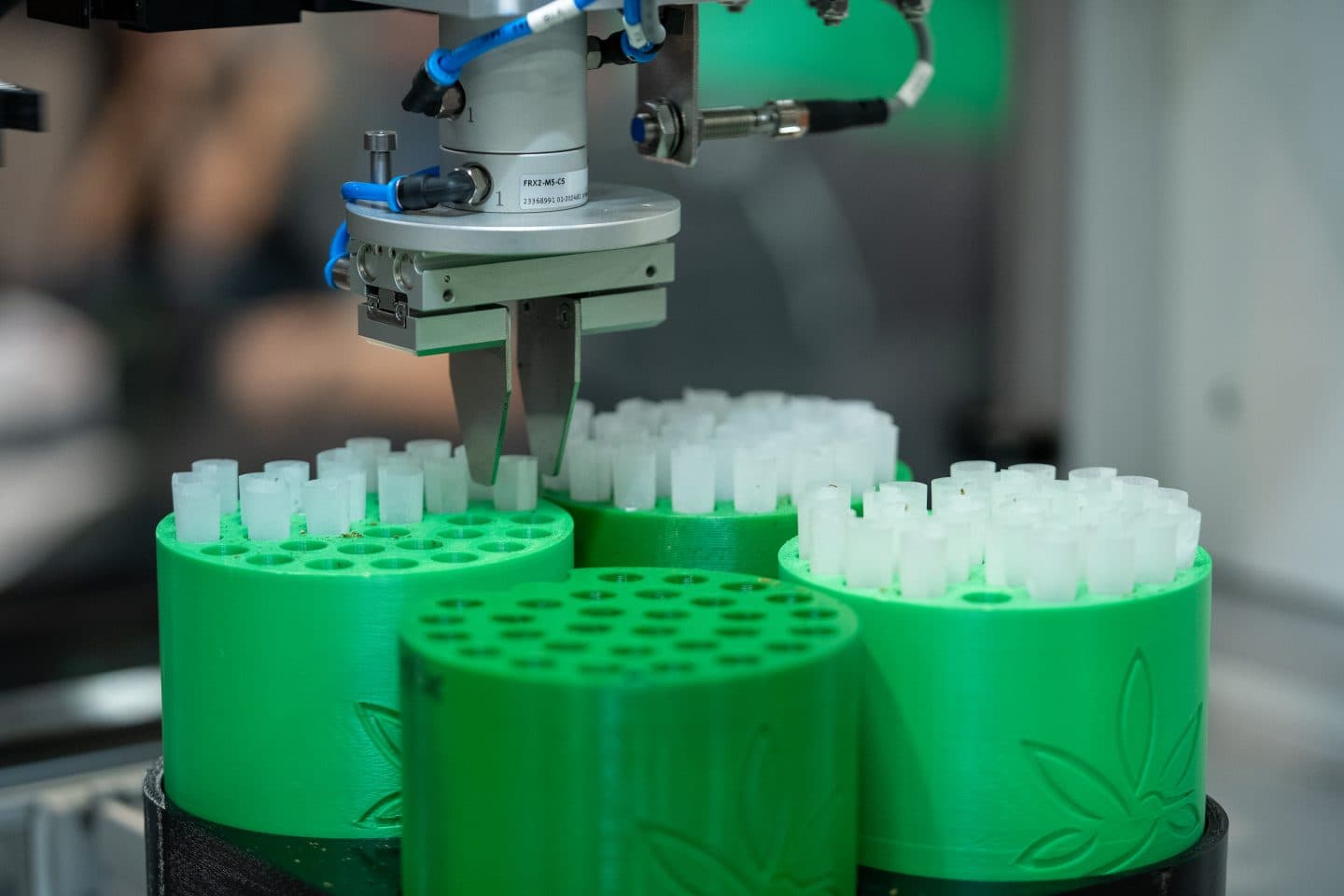
Recognizing these challenges, manufacturers like PreRoll-Er have developed new technologies designed to address these production flaws. The company has introduced two solutions: the Spin-Er, which uses centrifugal force to achieve a more consistent pack, and the PR200, which employs tempered layered compaction with density control. The Spin-Er's spinning motion distributes flower evenly within the cone, while the PR200 builds the pre-roll in controlled stages to ensure uniform airflow and burn. These innovations aim to deliver a reliably smooth smoking experience at both small and large production scales
Patrick Grenier, Certified Ganjier at PreRoll-Er, stressed the importance of engineering in pre-roll manufacturing, stating, "The goal was never just to fill cones faster. The goal was to solve the real production problems that make pre-rolls clog, canoe, or smoke inconsistently. If you respect the plant, you have to respect the way it is packed." This perspective underscores a growing movement within the cannabis industry to prioritize consumer experience and product integrity over mere output speed
As the pre-roll segment continues to grow, brands are under increasing pressure to improve quality and regain consumer trust. High Times reports that a failed pre-roll not only creates a negative moment, but can also result in a lost customer. The shift toward advanced manufacturing solutions signals a broader industry commitment to quality, as producers recognize that the future of pre-rolls lies in precision engineering, not just fast filling
OG Lab’s analysis: As competition intensifies in the cannabis sector, product quality and consistency are becoming key differentiators. The evolution of pre-roll production toward controlled density and better airflow reflects a maturing industry that is responding to consumer demands. Companies that invest in these technologies are likely to gain a significant edge as the market continues to expand