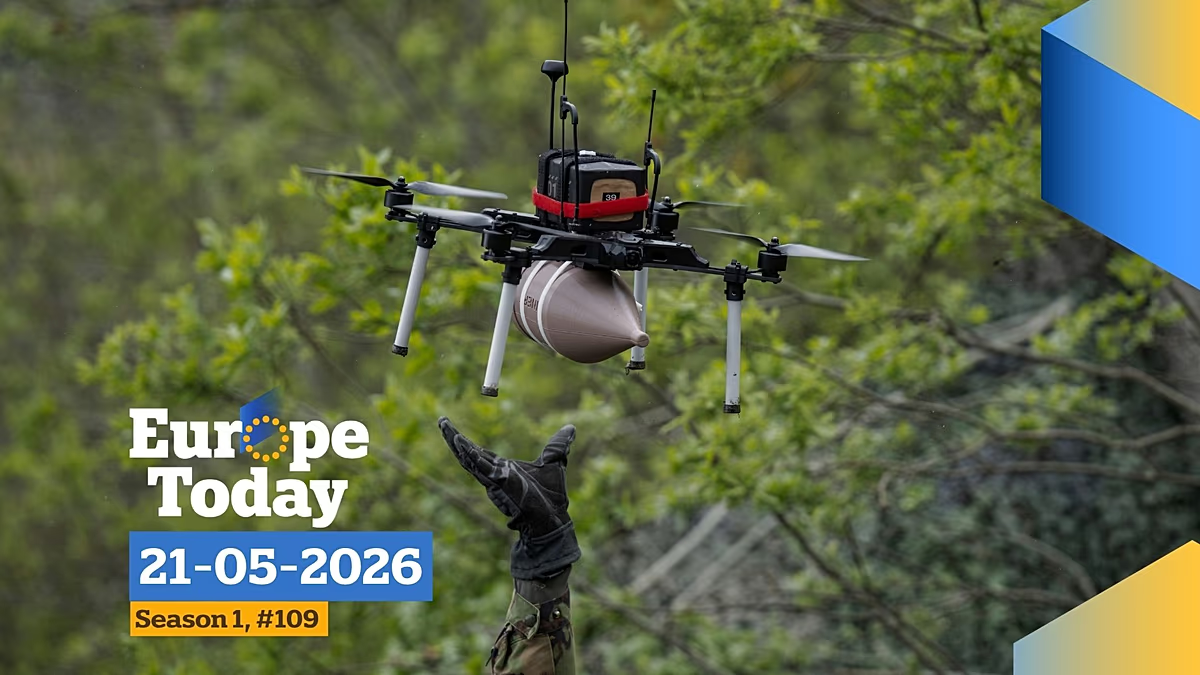
European Leaders Address Drone Incursions, Security, and Political Tensions in Lithuania and Beyond
European leaders are responding to drone incursions, political tensions, and security concerns, as highlighted in a series of reports and interviews covering Lithuania, Germany, and the wider EU
Key Points
- 1Political reactions intensify in Lithuania following a drone incursion incident
- 2EU Commissioner Henna Virkkunen discussed tech sovereignty, security, and democracy
- 3NATO foreign ministers gathered in Sweden, with US Secretary of State Marco Rubio expected to attend
- 4German Chancellor Friedrich Merz faces growing unpopularity, according to analysis
- 5A controversial video of Israel’s National Security Minister drew international criticism
European leaders are grappling with a series of pressing issues, from drone incursions in Lithuania to political turbulence across the continent. According to Euronews, Sasha Vakulina reported on the strong political reactions sparked by an incident involving drones and the resulting debate over national security and border protections. Meanwhile, an interview with Henna Virkkunen, Commissioner responsible for tech sovereignty, security, and democracy, highlighted the EU’s ongoing efforts to bolster its technological independence and safeguard democratic values
The day also featured analysis from Jakub Janas on the declining popularity of German Chancellor Friedrich Merz, as well as coverage of NATO foreign ministers convening in Sweden, where US Secretary of State Marco Rubio is expected. In addition, Shona Murray reported on global criticism following a video depicting Israel’s National Security Minister Itamar Ben-Gvir taunting activists from a Gaza-bound aid flotilla. As Méabh Mc Mahon, Euronews’ chief anchor, stated, "Our new format brings you the day's key events plus crucial analysis of all the stories shaping the EU and beyond."
OG Lab notes that Europe’s evolving security landscape and shifting political dynamics demand close attention, especially as new technologies and international tensions reshape the region’s priorities