GOP Lawmakers Advance Measure to Block Federal Cannabis Rescheduling Amid Trump Administration Shift
Republican lawmakers in Congress are moving to block federal cannabis rescheduling even as the DEA begins accepting applications from state-licensed medical marijuana businesses for new protections
Key Points
- 1House Appropriations Subcommittee is advancing a bill to block federal marijuana rescheduling
- 2DEA is accepting applications from state-licensed medical cannabis businesses under the Trump administration’s rescheduling move
- 3Rep. Alexandria Ocasio-Cortez expressed support for rescheduling but noted it does not address all past harms
- 4A South Carolina law may allow access to medical cannabis following federal rescheduling
- 5A federally funded study found strong public demand for broader cannabis reforms beyond Schedule III reclassification
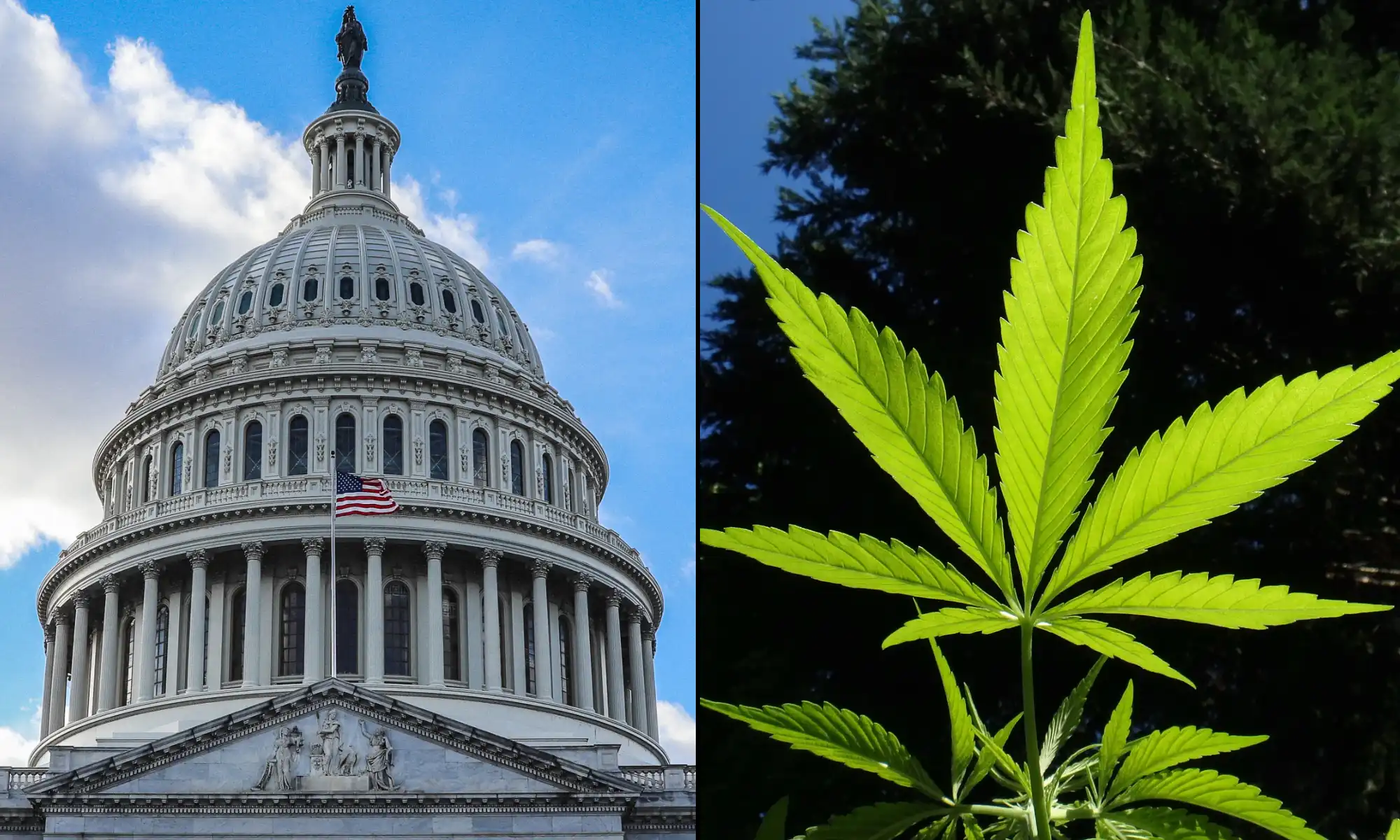
As the Trump administration moves ahead with federal cannabis rescheduling, Republican lawmakers in Congress are mounting efforts to halt the reform. On Thursday, the House Appropriations Subcommittee on Commerce, Justice, Science, and Related Agencies is set to consider a bill that contains provisions aimed at blocking the federal reclassification of marijuana. This comes even as the Drug Enforcement Administration (DEA) has begun accepting applications from state-licensed medical cannabis businesses seeking new federal protections and tax advantages under the proposed Schedule III status
The rescheduling initiative has attracted both support and criticism across the political spectrum. Representative Alexandria Ocasio-Cortez (D-NY) told Marijuana Moment she backs the Trump administration’s move, noting that while the reform is significant, it does not fully address the harms caused by decades of prohibition. “It doesn’t quite make all the wrongs right,” Ocasio-Cortez said, emphasizing that many individuals whose lives were disrupted by the war on drugs remain affected
At the state level, the impact of federal rescheduling is already being felt. A previously little-known law in South Carolina could now allow patients to access medical cannabis, with a state senator noting that the federal shift triggers “a chain of legal consequences” that state officials “can no longer ignore.” Meanwhile, in Indiana, Governor Mike Braun (R) stated that the state is “more likely” to legalize marijuana in light of the federal change, signaling a potential shift in state policy
Public sentiment also appears to be ahead of legislative action. A new federally funded study, which reviewed more than 40,000 public comments submitted to the official marijuana rescheduling docket, found “strong public demand for broader reforms than the proposed Schedule III reclassification” currently under consideration. This underscores growing frustration among advocates and patients who argue that the reclassification does not go far enough to address broader criminal justice and access issues
While some states are responding with progressive measures, others are tightening restrictions. In Louisiana, the House of Representatives passed a bill that could impose jail sentences of up to one year for individuals caught smoking marijuana within 2,000 feet of a school, including college campuses. This divergence in state-level approaches highlights the patchwork nature of cannabis policy across the U.S., even as federal attitudes begin to shift
From the OG Lab newsroom perspective, the current standoff in Congress is a pivotal moment for the cannabis industry. The interplay between federal reform, state policy evolution, and public demand for broader change signals a period of uncertainty and opportunity. Industry stakeholders should closely monitor regulatory developments, as the outcome could set the tone for cannabis policy in the coming years