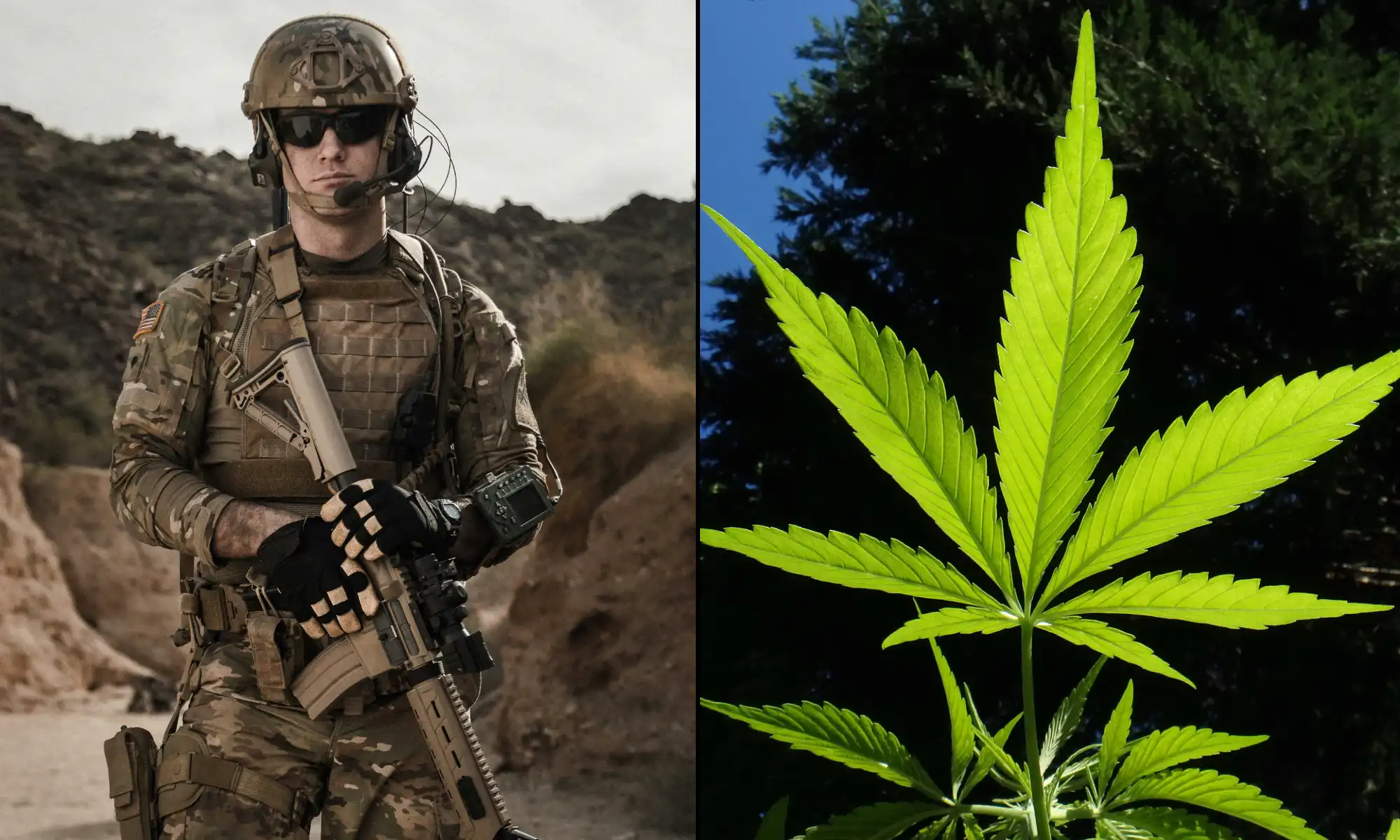
US Military Reaffirms Cannabis Ban Despite Federal Rescheduling
The Pentagon has clarified that marijuana use remains strictly prohibited for military personnel and civilian employees, regardless of recent federal moves to reschedule cannabis
Key Points
- 1The Department of War restated its prohibition on marijuana use for military service members and civilian employees
- 2A memo dated July 9 emphasizes that violations are punishable under the Uniform Code of Military Justice
- 3Recent federal rescheduling of medical marijuana does not affect the military's zero-tolerance policy
- 4FDA-approved cannabis formulations with valid prescriptions are exempt from the ban
- 5The Army recently relaxed recruiting policies for minor marijuana offenses but overall military restrictions remain strict
The Department of War (DOW) has reiterated its strict prohibition on marijuana use for both military service members and civilian employees, even as the federal government moves to reschedule cannabis. In a memo dated July 9, DOW clarified that its zero-tolerance policy remains unchanged, regardless of recent changes to cannabis's legal status under federal law. This stance comes amid broader national reforms and ongoing administrative hearings considering further rescheduling of marijuana
According to the memo, DOW's commitment to a drug-free workplace is necessary to "protect national security, public safety, and operational readiness." The document, obtained by Marijuana Moment, emphasizes that the Uniform Code of Military Justice (UCMJ) continues to prohibit the use, possession, manufacture, or distribution of marijuana. "These offenses remain punishable under the UCMJ, even if a State or local jurisdiction legalizes the use of recreational marijuana or authorizes the sale of marijuana, including medical marijuana, at State dispensaries," wrote Anthony J. Tata, the under secretary of war for personnel and readiness
The memo also addresses the recent order by U.S. Acting Attorney General Todd Blanche, which shifted state-regulated medical marijuana products from Schedule I to Schedule III under the Controlled Substances Act. However, DOW's guidance appears cautious, noting that "if implemented, the reform would not decriminalize marijuana under Federal law." Service members and civilian employees are warned that violations of these prohibitions may result in judicial, nonjudicial, or administrative action. "These prohibitions do not apply to formulations approved as drugs by the FDA with a valid prescription for a legitimate medical purpose," the memo concludes
Recent years have seen some relaxation in military recruiting policies, such as the Army’s decision in April to no longer require waivers for recruits with a single conviction for marijuana possession. Nonetheless, all branches have continued to issue reminders about their zero-tolerance approach, extending bans even to federally legal hemp-derived products, including CBD and delta-8 THC. Notices from the Air Force, Navy, and Coast Guard have reinforced that use of any cannabis or hemp products remains strictly forbidden on military property and for active personnel
The Congressional Research Service has suggested that the new Schedule III status may offer certain protections for patients holding state medical marijuana licenses, but the Pentagon’s position remains firm. As stated in the memo, "Service members who violate the UCMJ may be held appropriately accountable, including through judicial, nonjudicial, or administrative action." This ongoing disconnect between evolving federal policy and military regulations highlights the unique legal environment facing U.S. service members
OG Lab notes that the Pentagon’s steadfast approach serves as a reminder that, despite nationwide shifts in cannabis law, military rules remain some of the nation’s strictest. Those considering military service or currently enlisted should remain aware of these prohibitions, as further changes to federal cannabis policy may not immediately alter Department of Defense standards