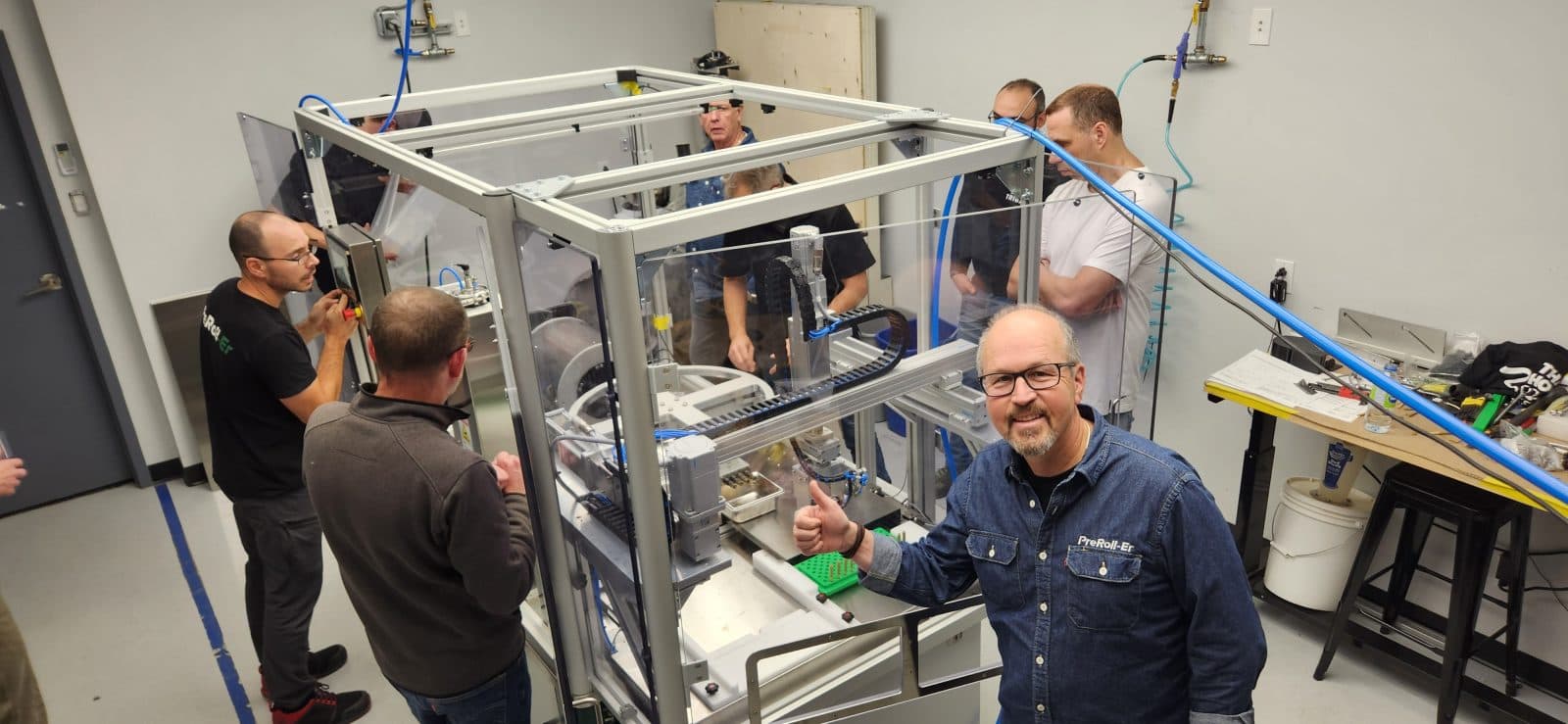
PreRoll-Er Introduces Scalable Automation Framework for Cannabis Producers
PreRoll-Er has launched a stepwise automation framework to help cannabis producers scale operations efficiently while maintaining product consistency and workflow integration
Key Points
- 1PreRoll-Er introduced a five-level 'Road to Success' framework for cannabis automation
- 2The framework emphasizes gradual scaling and operational consistency over one-time equipment purchases
- 3Entry-level automation tools like the STR Starter Kit help standardize processes for small producers
- 4PreRoll-Er's expanded product line includes packaging, labeling, and coating systems for integrated workflows
Cannabis producers are increasingly turning to automation as rising demand exposes the limitations of manual production methods. According to High Times, what starts as a manageable workflow with hand-filling and packaging can quickly become overwhelmed by higher order volumes, leading to increased labor costs and inconsistent product quality. "Teams start solving problems with overtime instead of systems," the article notes, underscoring the urgent need for smarter operational strategies as companies scale
PreRoll-Er, a leading automation provider, has responded with its 'Road to Success' framework—a five-level approach designed to help cannabis operators scale production in stages rather than making risky, all-in investments. The company emphasizes that true scaling is not just about producing more units but about maintaining consistency and operational control as output increases. This stepwise model aims to solve the right problem at the right time, ensuring that automation investments align with a business's current needs and future growth plans
Early-stage cannabis operations often struggle with repeatability, as manual processes can result in uneven fills, wasted product, and labor-intensive workflows. Entry-level automation tools like the STR Starter Kit are designed to standardize these processes, improving consistency without overwhelming operators with complexity. "The point at this stage isn’t maximum throughput. It’s building a stable foundation," the article explains, highlighting the pitfalls of scaling up inconsistent processes too soon
As businesses grow, the pressure shifts from consistency to volume and labor efficiency. Mid-level automation systems become essential for increasing throughput while maintaining quality and reducing manual intervention. However, High Times points out that automation should not aim to eliminate people from the process entirely, but rather to "eliminate repetitive bottlenecks that drain labor resources and create inconsistency at scale." The focus moves from individual machines to interconnected systems, as operators realize that bottlenecks can shift from production to packaging, labeling, or compliance as they grow
PreRoll-Er has expanded its offerings to include packaging, labeling, and coating systems, recognizing that mature operators require seamless workflows across departments. The Semi-Auto Flower Packaging Line, for instance, is tailored for one-person operation and emphasizes accuracy and flexibility over sheer output. At the highest levels of production, systems like the PreRoll-Er 200 are built for operational durability, with the latest version reflecting continuous feedback from operators. Ultimately, the 'Road to Success' framework encourages businesses to add automation incrementally, matching solutions to their stage of growth and leaving room for future adaptation
OG Lab notes that as the cannabis industry matures, the conversation is shifting from raw output to operational efficiency and adaptability. Companies that approach automation as infrastructure planning—rather than a quick fix—are likely to build more resilient operations that can thrive amid changing regulations and market demands. The true winners will be those who invest in systems designed to evolve alongside their businesses